
Tucked into the pine-covered slopes of Odaesan National Park in Gangwon, the National Museum of the Annals of the Joseon Dynasty holds something that almost didn’t make it home. For 110 years, a significant portion of Korea’s most important historical record sat on the shelves of a Japanese university library, taken during the colonial era. When those 75 volumes finally returned to Korean soil in 2006, they needed a permanent home — and in 2023, this quiet mountain museum opened its doors to give them exactly that.
This guide is for travelers who want more than just another sightseeing tick. If you’re interested in Korean history, UNESCO heritage, or simply the kind of place that rewards a slow, thoughtful visit, read on.
The Story Behind the Annals
To understand why this museum exists where it does — far from Seoul, deep in a mountain valley — you have to understand the Annals themselves.
The Joseon Wangjo Sillok (조선왕조실록) is a 472-year, day-by-day record of the Joseon Dynasty, covering the reigns of 25 kings from 1392 to 1863. It spans 1,893 volumes across 888 books and contains roughly 50 million Chinese characters. Every court discussion, every royal decision, every natural disaster and diplomatic exchange was written down by historians whose independence was fiercely protected — even the king himself was not allowed to read what had been recorded about him. In 1997, UNESCO inscribed the Annals on its Memory of the World Register, recognizing it as one of the most comprehensive continuous historical records ever produced by any civilization.
Because the Annals were so precious, the royal court duplicated them and stored copies in four separate mountain archives (called sago, 사고) — a kind of pre-modern disaster-recovery plan. One of those archives sat right here on Odaesan Mountain. During the 1910–1945 Japanese colonial period, the Odaesan archive volumes were taken to Tokyo Imperial University. Most were lost in the 1923 Great Kantō earthquake, but 75 volumes survived, and after decades of negotiation and civic campaigns led by Korean monks and historians, they were finally returned.
“The museum doesn’t just display old books. It displays the act of remembering — a country deciding that its own history was worth bringing home.”
That’s the emotional weight you carry with you through the galleries. It’s why many visitors say this is not a museum you rush through.
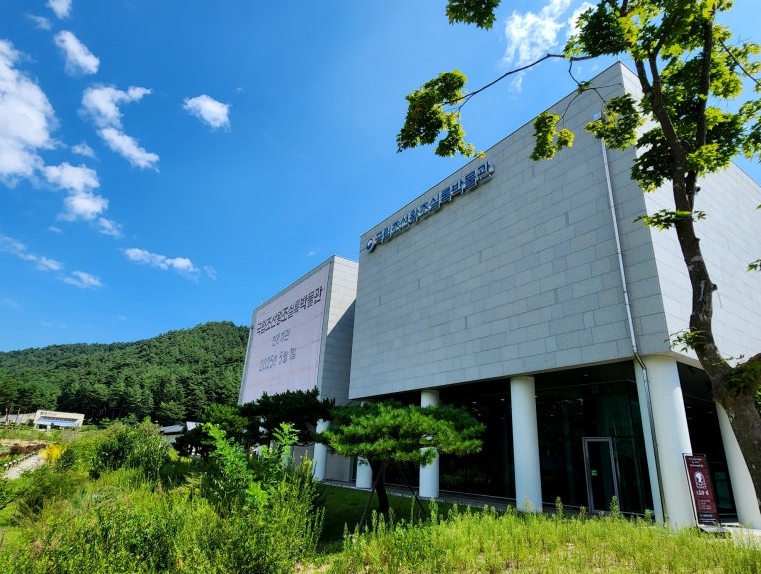
When you arrive, the building itself is the first pleasant surprise. Located right beside the Woljeongsa Temple entrance road, the museum is a modern, clean-lined structure that looks almost sculptural against the dark green forest behind it — easy to find, and visually striking enough to put you in the right mood before you even step inside. The open-air courtyard in front includes small hanok-style wooden structures and occasional pop-up tents for seasonal programs, softening what could have been a formal, imposing atmosphere. It feels less like a state museum and more like a place families can genuinely spend an afternoon at.
What You’ll See Inside — Gallery by Gallery
The museum is compact compared to the big national museums in Seoul, but each space is designed with real intention. Plan for 90 minutes to 2.5 hours, depending on how deeply you read the panels (which are available in Korean and English).
The Returned Volumes Gallery
This is the heart of the museum, and for many visitors, the moment the trip clicks. You stand directly in front of the actual 75 repatriated Odaesan archive volumes, bound in deep indigo covers with hand-sewn stitching. Reading the small placards that explain which king each volume records, and then realizing you’re looking at the physical object that survived an earthquake, a century of exile, and a trans-Pacific return — it hits harder than you’d expect.
Alongside the Annals you’ll also find the Uigwe (의궤), the royal protocol books that documented court ceremonies in beautifully illustrated color. These are a visual counterpoint to the Annals’ dense text: if the Annals tell you what happened, the Uigwe show you exactly how it looked.
The Immersive Media Room
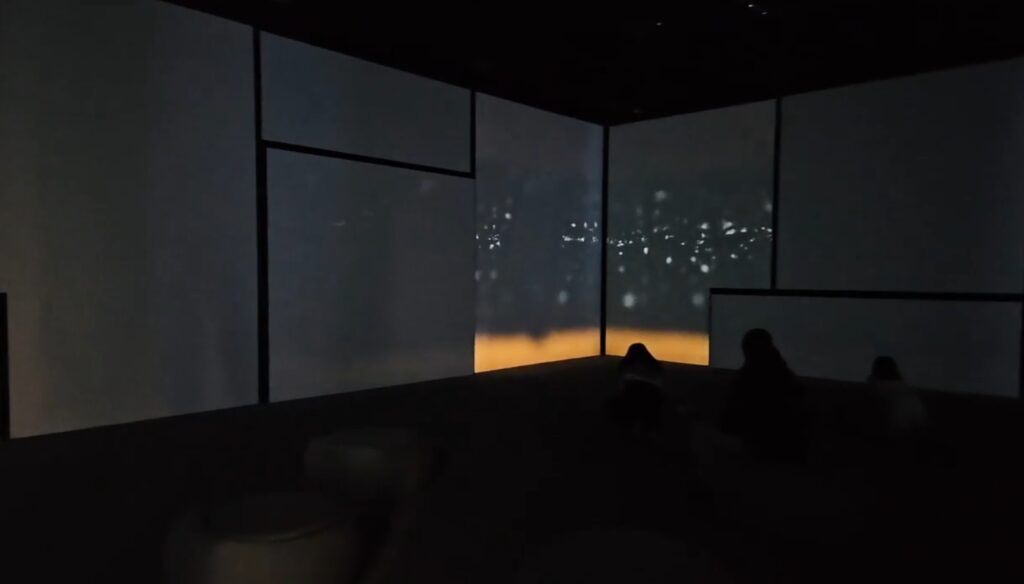
This is where the museum shows real creativity. A wall-sized digital installation walks you through the full life cycle of an Annal — how a historian at court made discreet notes, how those notes were edited and bound after a king’s death, how the finished volumes were hauled up mountain paths to the archives, and how they survived (or didn’t) through centuries of war.
The piece uses hand-painted animation rather than CGI realism, which suits the subject beautifully. Even visitors who don’t read Korean find it easy to follow. If you’re traveling with children or anyone who normally finds text-heavy museums exhausting, this room alone can carry their attention for 15–20 minutes.
The Children’s Discovery Zone
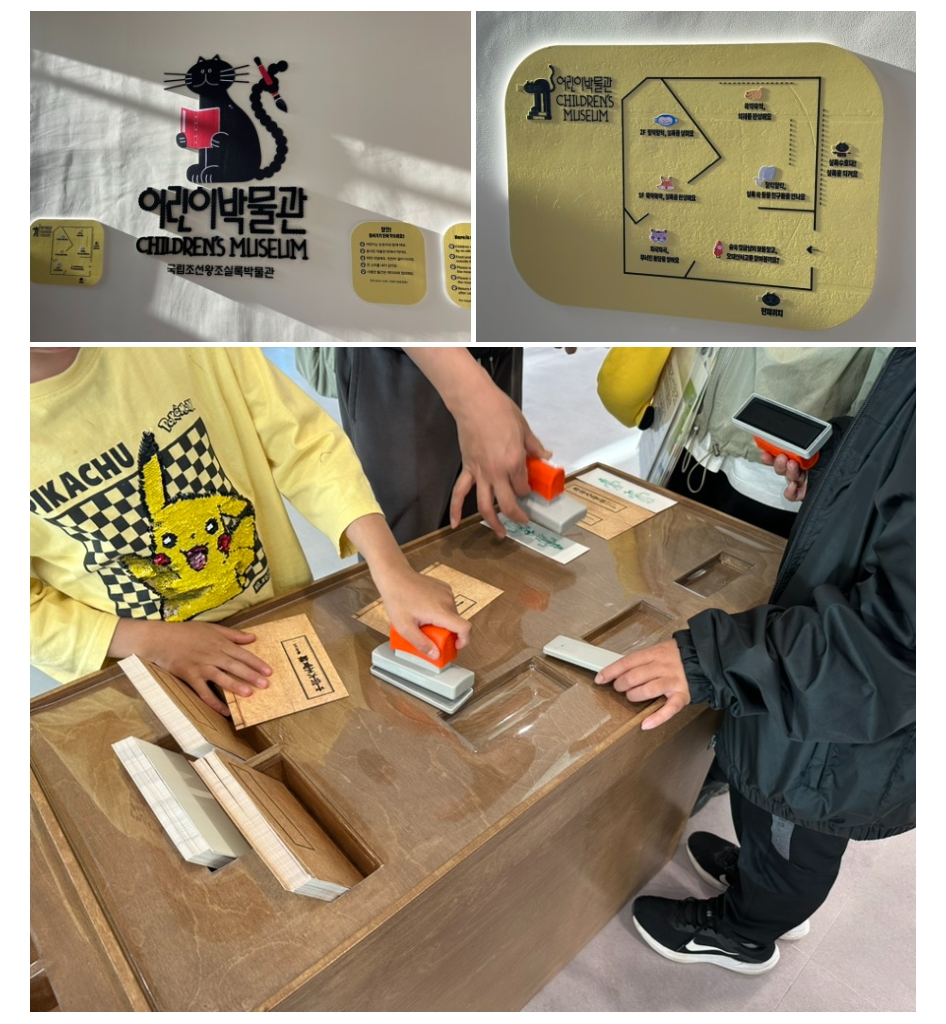
A small but well-made space aimed at roughly ages 4–10, with a friendly cat mascot character greeting kids at the entrance — a simple touch that immediately signals “this part is for you” and puts younger visitors at ease. The highlight inside is a stamp-printing station where kids press their own carved seals onto a paper mock-up of an Annal page and take home a souvenir. It’s a clever way to communicate what “making a record” actually felt like as a physical craft. Quiet, calm, and genuinely educational — not a generic play area.
A Welcoming Museum for All Ages
One of the quiet strengths of this museum is how thoughtfully it accommodates visitors who might otherwise struggle at a serious cultural site — families with infants, travelers with heavy backpacks, elderly visitors who need to plan their movements. It’s the kind of attention to detail that doesn’t show up in guidebook summaries but makes a real difference on the day of your visit.
As soon as you step inside the main entrance, you’ll find a clearly illustrated first-floor directory map. Before heading into the galleries, take thirty seconds to check it — it shows not just the exhibition rooms but also where the lockers, nursing room, and rest areas are located, which genuinely helps with planning your route if you have kids or a group of mixed pace.
The lockers near the entrance are clean, free to use, and large enough for a winter coat, daypack, or small suitcase. Foreign travelers arriving directly from a morning KTX often appreciate this — you can store your bag and walk the galleries unburdened. For families with babies, the nursing room is comfortable, private, and equipped with the basics you’d want, so a feeding stop doesn’t break the visit rhythm.
These aren’t dramatic features, but together they’re the reason this museum has become a quiet favorite among multi-generational Korean families — and why it works surprisingly well for foreign travelers too.
Planning the Practical Stuff
Here’s the core logistical information, kept brief so you can scan it at a glance.
Mar–Oct: 9:30–17:30
Nov–Feb: 9:30–17:00
Last entry 30 min before close
Closed Mondays, Jan 1, Seollal & Chuseok
FREE (temporary free-entry period)
No reservation required
Audio guide available on-site
English panels throughout
176 Odaesan-ro, Jinbu-myeon, Pyeongchang-gun
강원 평창군 진부면 오대산로 176
Official: sillok.gogung.go.kr
A note on parking: the recommended lot is the Odaesan Sanmun Parking Lot (오대산산문주차장), also called the Odaesan Food Village lot. It’s a daily flat-rate system — 2,000 KRW for light cars under 1,000cc, 4,000 KRW for regular passenger cars in low season (Dec–Apr) or 5,000 KRW in peak season (May–Nov), and 6,000–7,500 KRW for buses. Avoid the Woljeongsa Temple lot for museum visits specifically — it runs about 6,000 KRW for a passenger car and is positioned for temple-first itineraries.
Getting There from Seoul
Pyeongchang feels remote on a map, but it’s genuinely well-connected thanks to the KTX line built for the 2018 Winter Olympics. Here are the three realistic options in order of how I’d recommend them to a foreign traveler.
The KTX from Seoul Station to Jinbu (Odaesan) Station is by far the easiest path. The ride takes about 1 hour 40 minutes to 2 hours, with multiple departures per day. You can book in English through the Korail website (letskorail.com) or the KTX app. Once you arrive at Jinbu Station, a taxi to the museum takes 15–20 minutes and costs roughly 20,000–30,000 KRW — just say “국립조선왕조실록박물관” (Gungnip Joseon Wangjo Sillok Bakmulgwan) or “Woljeongsa sillok bakmulgwan.” If you prefer public transit, local bus lines 225, 226, and 227 run from the Jinbu intercity bus terminal (next to the train station) toward Woljeongsa and pass the Odaesan Food Village stop near the museum. The ride is about 20 minutes, though departures are infrequent, so check times before committing.
The intercity bus from Dongseoul Terminal (지하철 2호선 강변역, Gangbyeon Station Line 2 Exit 4) is a good budget alternative — the ride to Jinbu takes 2 hours 10 to 2 hours 40 minutes, with departures roughly every 30–40 minutes from early morning to around 8:20 PM. From the Jinbu terminal you follow the same taxi or local-bus options. Nambu Terminal (남부터미널) also runs buses to Jinbu, but only three times a day (07:40, 11:00, 17:40), so it’s less flexible.
Driving yourself takes about 3 hours from central Seoul via the Yeongdong Expressway, exiting at Jinbu IC. It’s the most flexible option if you plan to visit Woljeongsa, the fir tree forest, and the museum all in one day, but factor in weekend traffic heading east out of Seoul — Friday evenings and Sunday afternoons can be genuinely slow.
Make a Full Day of It — Pairing with Woljeongsa & Odaesan
Here’s the honest truth: if you travel all the way to Pyeongchang only for the museum, you’ll finish by early afternoon and wonder what to do next. The locals know this, which is why almost every well-planned visit pairs the museum with the surrounding sites. Here’s a realistic full-day itinerary that works well in any season except deep winter.
If you have more time, the Seonjae Trail (선재길) is an 8-km hiking path connecting Woljeongsa to Sangwonsa Temple further up the mountain. It’s considered one of Korea’s most beautiful easy hikes, especially in autumn.
Before You Go — A Traveler’s Checklist
✓ Check the museum is not closed for a Monday or Korean holiday before planning your trip
✓ Download Naver Map or Kakao Map — Google Maps gives poor transit directions in Korea
✓ Book KTX tickets at least a day ahead on weekends via Korail’s English site
✓ Bring comfortable walking shoes — the forest path to Woljeongsa has uneven ground
✓ Pack a light jacket in any season — Odaesan is cooler than Seoul by 3–5°C
✓ Winter visitors: add warm gloves, hat, and traction-soled shoes — snow can be deep from December to March
✓ Use lockers near the museum entrance to stash jackets and bags before entering the galleries
The National Museum of the Annals of the Joseon Dynasty isn’t the kind of place you go for big, dramatic selfies. It’s a quieter experience — one built around a single extraordinary story told through objects that survived a great deal to be here. Pair it with a forest walk and a temple visit, arrive with a little context, and you’ll leave with one of the more memorable half-days of your entire Korea trip.
Next up in our Gangwon series, we’ll walk through a 2-day Pyeongchang weekend itinerary for foreign visitors — combining this museum with Woljeongsa Temple, the fir tree forest, Alpensia Resort, and the quieter mountain towns most travelers miss. See you there.