
Planning a Busan day trip or searching for the best things to do in Busan on your next Korea travel adventure? Then Haedong Yonggungsa Temple absolutely belongs at the top of your list. Imagine a 600-year-old Buddhist temple perched on rugged coastal cliffs, with waves crashing just meters away and the first rays of sunrise painting golden temple roofs against the blue East Sea — this isn’t a scene from a Korean drama, it’s one of Busan’s most extraordinary real-life destinations.
While most traditional Korean temples are hidden deep in mountains, this rare seaside sanctuary has become a bucket-list spot for travelers from around the world. This complete Korea travel guide covers everything you need to know for your 2026 visit — from exact transportation routes from both Busan Station and Haeundae, parking details, opening hours, to insider tips, a quick-reference info table, and answers to the most common questions foreign visitors ask. Let’s dive in.
1. Why Haedong Yonggungsa Temple Is a Must-Visit in Busan
Before we get into the practical details, it’s worth understanding what makes this temple so special. Haedong Yonggungsa isn’t just another stop on a Busan sightseeing list — it consistently ranks among Korea’s most beautiful attractions on major travel guides like Lonely Planet and TripAdvisor, and for very good reasons.
1-1. A Rare Seaside Temple with Centuries of History
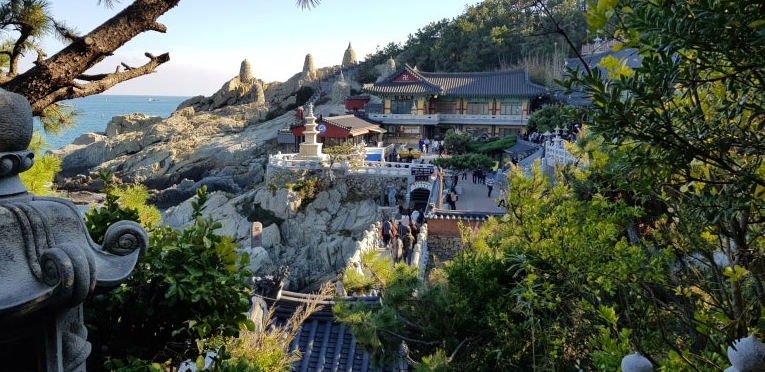
Originally built in 1376 during the Goryeo Dynasty by the revered Buddhist teacher Naong, this temple is one of the very few in Korea that sits directly on the coast. Its official name translates to “Dragon Palace Temple of the East Sea,” reflecting local legends that the Sea Dragon King resides here.
- Unique Coastal Setting: While over 90% of Korean Buddhist temples are built in mountain valleys for seclusion and meditation, Haedong Yonggungsa stands boldly on the rocky cliffs of Gijang-gun. This unusual location gives visitors a sensory experience you simply can’t find elsewhere in Korea — the sound of ocean waves mixing with temple bells, and salt air blending with incense.
- Deep Spiritual Significance: Koreans traditionally believe that prayers made at Haedong Yonggungsa are especially powerful, and many visit to pray for specific wishes — especially for academic success, childbirth, and family health. Even if you’re not religious, the atmosphere of sincere devotion mixed with ocean winds creates a profoundly peaceful feeling that many travelers describe as unforgettable.
- Cultural Heritage Value: The temple complex has been carefully preserved and reconstructed over the centuries, with most current buildings dating from restorations in the 1930s and later. The intricate dancheong paintings, dragon carvings, and traditional Korean Buddhist architecture offer a beautiful introduction to Korean temple design for first-time visitors to Korea.
1-2. What Foreign Visitors Love Most
Online reviews from travelers worldwide consistently highlight the same standout features. Here’s what international visitors mention most often when describing their Busan trip experience.
- Dramatic Photo Opportunities: From the iconic stone pagoda overlooking the sea to the golden Buddha statues set against rocky cliffs, nearly every angle offers a stunning photograph. Many travelers say this is the single most photogenic temple they’ve ever visited in Asia, with some comparing the vibe to a mix of Santorini’s cliff-top scenery and a classical Eastern temple.
- Completely Free Entry: Unlike many famous cultural sites in other countries, Haedong Yonggungsa charges no entrance fee whatsoever. You’re welcome to make a small voluntary donation at the main hall, but there’s no pressure, making this an excellent stop for budget travelers, backpackers, and families exploring Busan.
- Peaceful Spiritual Atmosphere: Despite growing crowds, the temple maintains a genuine sense of calm, especially in quieter corners of the grounds. Watching monks perform morning rituals or simply sitting near the sea-facing Buddha statue offers a meditative pause that many travelers say was an unexpected highlight of their entire Korea trip.
2. Essential Visitor Information for 2026 (Quick Reference Table)
Planning your Busan day trip starts with the basics. Save the quick-reference table below in your travel notes — it covers everything from the exact Korean address (essential for taxi drivers) to opening hours, fees, and recommended visit duration.
| Category | Details |
|---|---|
| English Address | 86 Yonggung-gil, Gijang-eup, Gijang-gun, Busan |
| Korean Address (for taxi) | 부산광역시 기장군 기장읍 용궁길 86 |
| Korean Name (for map apps) | 해동용궁사 |
| Opening Hours | 4:30 AM – 7:20 PM (last entry around 6:50 PM) |
| Entrance Fee | FREE (optional donation) |
| Parking Fee | Around 3,000 KRW (private lot, card payment only) |
| Recommended Visit Duration | 1.5 – 2 hours |
| Best Time to Visit | Sunrise or weekday mornings before 9 AM |
| Nearest Major Area | Haeundae (20–30 min by taxi) |
| Official Tourism Info | Visit Busan official site |
2-1. Best Times to Visit
Timing your visit well can completely transform the experience. The difference between a crowded midday visit and a peaceful sunrise visit is honestly night and day.
- Sunrise Visits (Most Recommended): Arriving before sunrise — typically between 5:30 and 6:30 AM depending on the season — gives you the most magical experience possible. The golden light on the sea-facing Buddha statue is breathtaking, and you’ll have the grounds almost entirely to yourself for photos before the tour buses arrive around 10 AM.
- Weekdays vs Weekends: If possible, visit on a weekday rather than a weekend or Korean holiday. Crowds can be three to four times larger on weekends, and popular photo spots may require waiting in line during peak afternoon hours. Tuesday through Thursday mornings are consistently the quietest times of the week.
- Seasonal Considerations: Spring (April–May) and autumn (October–November) offer the most pleasant weather with mild temperatures and clear skies — these are considered the best months for any Korea travel itinerary. Summer can be hot and humid with occasional rain, while winter brings crisp but cold sea winds, so bundle up well if you visit from December to February.
2-2. Parking at Haedong Yonggungsa Temple
One detail that catches many foreign visitors off guard: the parking lot near the temple is not operated by the temple itself, but by a private parking company, so cash payments are not accepted — bring a card or your travel Wise/Revolut card.
- Payment Method: Card payment only. Korean debit or credit cards work fine, and most major international cards (Visa, Mastercard, JCB) are also accepted at the payment kiosk. The standard fee is around 3,000 KRW regardless of how long you stay.
- Parking Availability: Even during busy summer weekdays, open spots are usually available if you arrive before 11 AM. However, on weekends, Korean holidays, or during peak tourist season, the lot can fill up surprisingly fast — morning arrival is strongly recommended if you’re driving.
- Walking to the Temple: From the parking area, you’ll need to walk uphill for a few minutes before reaching the entrance and shopping street. It’s a short distance but noticeable, so factor this in if you’re traveling with elderly family members or small children.
3. How to Get to Haedong Yonggungsa Temple from Haeundae and Busan Station
Getting to the temple is easier than many foreign visitors expect, but knowing your options in advance saves both time and money on your Busan day trip. Here are the most reliable routes from Busan’s main tourist areas, with realistic 2026 pricing and travel times.
3-1. From Haeundae Beach Area
Since many foreign travelers stay near Haeundae, this is the most common starting point. You have several options depending on your budget and preferences.
- Taxi (Easiest Option): A taxi from Haeundae takes about 20 to 30 minutes and costs roughly 15,000 to 20,000 KRW, depending on traffic. This is the most stress-free option, especially if you’re traveling with family, luggage, or older companions — use the Kakao T app for easy English-language taxi booking without language barriers.
- Public Bus (Budget-Friendly): Take bus number 100, 181, or 1001 from Haeundae Station Exit 7. The ride takes 30 to 40 minutes and costs only about 1,500 KRW with a T-money card. Get off at “Yonggungsa Temple” or “National Fisheries Science Institute” stop (용궁사·국립수산과학원), then walk 5 to 10 minutes downhill to the entrance. You can check real-time bus schedules on the official Busan Transport Corporation site.
- Organized Day Tours: Booking a half-day or full-day tour through platforms like Klook, Viator, or GetYourGuide costs around 40,000 to 80,000 KRW and includes hotel pickup, an English-speaking guide, and visits to other nearby attractions. This is ideal if it’s your first time in Korea and you prefer hassle-free logistics.
3-2. From Busan Station (부산역) — For KTX Travelers
If you’re arriving in Busan by KTX from Seoul or another major city, Busan Station will likely be your starting point. The total journey takes approximately 1 hour to 1 hour 30 minutes depending on your chosen transportation.
- Express Bus 1001 (Best Value): Board the seat-type express bus number 1001 directly from the bus stop in front of Busan Station. The fare is 2,100 KRW with a transit card or 2,200 KRW in cash, and the ride takes about 60 to 80 minutes. Get off at the “Yonggungsa·National Fisheries Science Institute” stop (용궁사·국립수산과학원 정류장). This is the most budget-friendly direct option and popular with local travelers.
- Taxi (Fastest with Luggage): A direct taxi from Busan Station takes 30 to 50 minutes depending on traffic, with fares ranging from 22,000 to 35,000 KRW. This is ideal if you have heavy luggage, a tight schedule, or are traveling in a small group where splitting the cost makes it competitive with public transit.
- Metro + Bus Combo: Take Busan Metro Line 1 to Seomyeon Station, transfer to Line 2 heading toward Jangsan, get off at Haeundae Station, then take bus 1001 or 181 for the last leg. Total time is roughly 1 hour 20 minutes, and it costs around 3,000 KRW total — only recommended if you want to explore neighborhoods along the way.
- Self-Drive: The distance from Busan Station is approximately 24 to 28 km, taking 30 to 50 minutes depending on traffic. Parking at the temple costs 3,000 KRW (card only, private lot), and during peak season the lot fills up quickly, so an early morning arrival is strongly recommended.
3-3. From Gimhae International Airport
If you’re arriving directly from the airport, plan for a longer journey since the temple is on the eastern edge of Busan, relatively far from the airport.
- Public Transit: Use the airport light rail to Sasang Station, then transfer to the metro system toward Haeundae. The full journey by public transit takes roughly 2 hours with bus transfers, so most travelers choose a taxi or shuttle instead.
- Direct Taxi: A direct taxi from Gimhae Airport to the temple costs around 50,000 to 60,000 KRW and takes 50 to 60 minutes. Many travelers prefer to first check into their Haeundae hotel and then head to the temple the next morning fresh.
4. Top Highlights and Must-See Spots at the Temple
Once you arrive, the temple grounds can feel surprisingly large for a coastal site. Don’t rush — here are the highlights you won’t want to miss during your visit, arranged roughly in the order you’ll encounter them along the main path.
- Entrance Shopping Street: Right after the parking area, you’ll pass a small shopping street with snack stands, souvenir shops, and even an Ediya Coffee branch for an iced Americano before your walk. The area is known for its fish-cake skewers (eomuk) — note that a single skewer recently sold for around 3,000 KRW, a price that made local news, so don’t be shocked by tourist pricing. There are also traditional Korean sweets and keychains, but the selection is modest compared to bigger tourist zones.
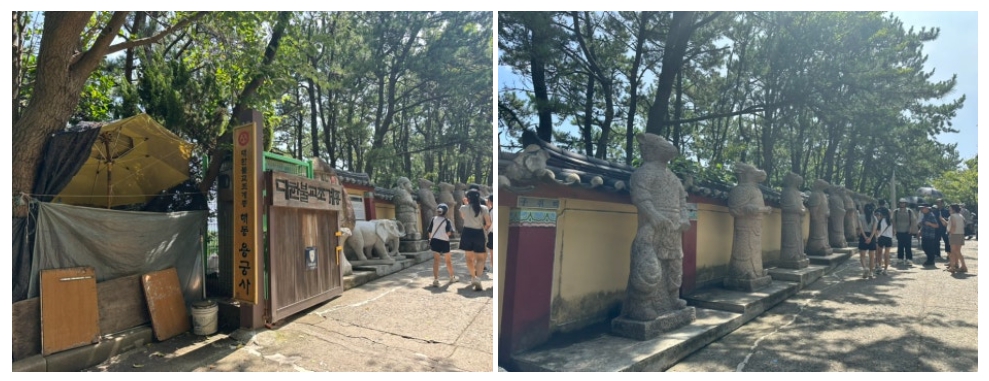
- The Twelve Zodiac Statues: Just past the shopping street, you’ll find stone statues representing the twelve animals of the Korean zodiac lined along the path. Find the one matching your birth year and snap a photo — it’s a fun cultural tradition, and locals often leave small coins at their zodiac animal for good luck throughout the year.
- The 108 Stone Steps: After the zodiac statues, the entrance path winds through a dragon gate and down 108 stone steps toward the sea, symbolizing the 108 earthly desires in Buddhist tradition. Take your time descending — each turn reveals a new ocean view, and there are small prayer stones and statues to notice along the way.
- Main Hall (Daeungjeon) and Dragon Carvings: The main hall features stunning traditional dancheong paintings in vivid reds, greens, and blues, along with intricate dragon carvings along the beams and roof. Remove your shoes before entering, stay quiet, and avoid using flash photography out of respect for worshippers.
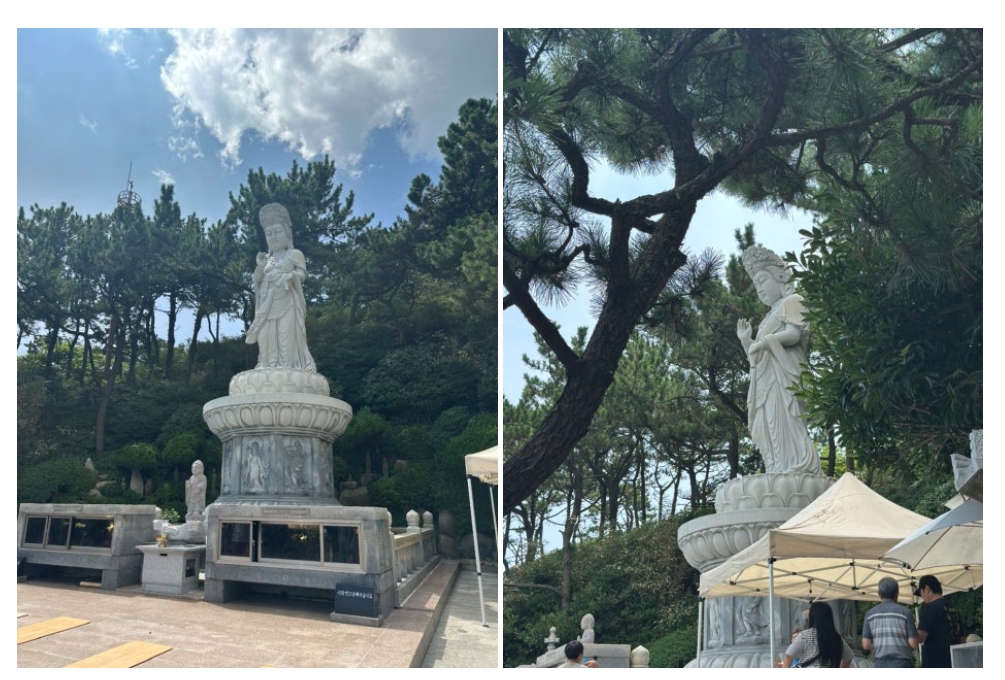
- Climb Up to Haesu Gwaneum Daebul Statue: From behind the main hall, another set of stairs leads up to the Haesu Gwaneum Daebul — the large stone Buddha also known as the Sea-Viewing Goddess of Mercy. The climb can feel tough on a hot summer day, but the sea breeze at the top cools you off, and the view of the statue framed against the blue East Sea is the single most iconic image of the temple. Many locals stop here to make one heartfelt wish.
-

Haesu Gwaneum Daebul Statue - Panoramic Sea View — Gijang Ananti Cove: From the upper viewing platform near the Buddha statue, look along the coastline toward the north — on a clear day you can spot Gijang Ananti Cove in the distance, a luxury resort complex that makes for a beautiful layered coastal view. The combination of blue sky, soft-colored sea, and curved temple rooflines in the foreground is why so many travelers describe this spot as genuinely magical.
- Stone Bridge and Rocky Coastline: The arched stone bridge connecting different parts of the temple offers some of the best panoramic views of the coastline. Walk slowly around the outer paths to discover hidden pavilions and photo angles that most tour groups completely miss during their rushed 45-minute visits.
5. Why Sunrise Visits Are Worth the Early Wake-Up
If there’s one piece of advice that travelers consistently wish they’d followed, it’s visiting Haedong Yonggungsa at sunrise. The temple is one of Busan’s most celebrated sunrise spots, and the experience before 7 AM is genuinely different from a midday visit.
✨ A Traveler’s Perspective: Many who’ve taken an overnight bus to Busan and caught the first local bus to the temple at dawn describe the experience in surprisingly similar ways — almost no other visitors, the quiet sound of waves against the cliffs, and a hush over the temple grounds that feels like stepping into a completely different world from the busy city center. The low golden light hitting the sea-facing Buddha creates photos you simply can’t replicate at any other time of day.
- Far Fewer Crowds: Tour buses generally don’t arrive until around 10 AM, so visiting between 5:30 and 8:00 AM means you’ll have most photo spots to yourself. This matters enormously at popular angles like the sea-facing Buddha statue and the stone pagoda where midday lines can stretch 20+ people deep.
- Cooler, More Comfortable Temperatures: Summer visitors in particular benefit from an early start — the cliffs get genuinely hot by 11 AM, while sunrise visits offer cool sea breezes that make climbing the stairs to the Haesu Gwaneum Daebul much more pleasant.
- A Truly Spiritual Atmosphere: Early morning is also when monks perform some of their daily rituals, and the combination of chanting, waves, and incense creates a meditative mood that day-trippers almost never experience. Even non-religious visitors often describe this as one of the most memorable moments of their entire Korea trip.
6. Practical Tips for Foreign Travelers
A little preparation goes a long way. These practical tips — gathered from experienced travelers and local insights — will help you get the most out of your visit while avoiding common mistakes.
- Wear Comfortable Walking Shoes: The temple grounds involve many stairs, uneven stone paths, and some steep sections — including the climb up to the Haesu Gwaneum Daebul — so sneakers or sturdy walking shoes are essential. Avoid heels, flip-flops, or slippery-soled shoes, especially after rain when the stone surfaces near the sea can become genuinely dangerous.
- Dress Respectfully and Prepare for Wind: There’s no strict dress code, but covering shoulders and knees is appreciated when entering prayer halls. Bring a light jacket or windbreaker even in summer — sea breezes at the cliffs can be surprisingly strong and cooler than in downtown Busan, especially during early morning visits.
- Bring a Card for Parking: If you’re driving, remember that the temple’s nearby parking lot only accepts card payment (no cash), so have a Korean debit card or international credit card ready before you arrive.
- Try Local Food Nearby: The entrance area has many small restaurants serving fresh seafood, including famous Gijang raw fish (hoe) and seafood pancakes. Prices are reasonable at sit-down restaurants (10,000–20,000 KRW per person), though street snacks like fish-cake skewers can be surprisingly pricey at around 3,000 KRW each. Most restaurants now have picture menus or English translations to make ordering easy for foreign visitors.
- Combine with Nearby Attractions: Make a full day of it by combining the temple with other eastern Busan highlights like Haeundae Beach, Songjeong Beach, or the Busan Blueline Park sky capsule ride. All are within 15 to 20 minutes by taxi and together they create one of the most scenic day-trip routes in all of Busan.
- Photography Etiquette: Photography is allowed throughout most of the grounds, but drones are strictly prohibited. Avoid photographing worshippers during prayer and never use flash inside temple halls. Golden hour — roughly one hour after sunrise and one hour before sunset — produces the most stunning images of the ocean-facing Buddha statue.
7. Frequently Asked Questions (FAQ)
Here are the questions foreign travelers ask most often when planning their visit to Haedong Yonggungsa Temple. For additional official tourism information, you can also check the Korea Tourism Organization English site or the Visit Busan official website.
Q. Is Haedong Yonggungsa Temple free to visit?
A. Yes, entry to Haedong Yonggungsa Temple is completely free for all visitors, including foreigners. There is no entrance fee or ticket required. You may optionally make a small donation at the main hall if you wish, but it is entirely voluntary. If you drive, parking costs around 3,000 KRW and can only be paid by card.
Q. How do I get to Haedong Yonggungsa from Busan Station?
A. The easiest public transit option is seat bus number 1001 directly from Busan Station, which costs 2,100 KRW by card and takes about 60–80 minutes. Get off at the “Yonggungsa·National Fisheries Science Institute” stop. A direct taxi takes 30–50 minutes and costs 22,000–35,000 KRW depending on traffic.
Q. How much does a taxi from Haeundae to Haedong Yonggungsa Temple cost?
A. A one-way taxi from Haeundae to Haedong Yonggungsa Temple costs approximately 15,000 to 20,000 KRW (about 11–15 USD) and takes 20 to 30 minutes depending on traffic. Using the Kakao T app is recommended for foreign visitors because it works in English and provides upfront pricing.
Q. Can I pay cash for parking at Haedong Yonggungsa?
A. No. The parking lot near the temple is operated by a private company (not the temple itself) and accepts card payment only. The fee is around 3,000 KRW regardless of how long you stay. Make sure to bring a valid Korean debit or international credit card before driving there.
Q. How long does it take to visit Haedong Yonggungsa Temple?
A. Most visitors spend about 1.5 to 2 hours exploring the temple grounds, including time for photos, walking the 108 stone steps, visiting the main hall, and climbing up to the sea-facing Buddha statue. If you plan to watch the sunrise or enjoy a nearby seafood meal, allow 3 to 4 hours total.
Q. What are the opening hours of Haedong Yonggungsa Temple?
A. Haedong Yonggungsa is generally open from 4:30 AM to 7:20 PM, with last entry around 6:50 PM. Hours may vary slightly by season, especially in winter when sunset comes earlier. The temple is open 365 days a year, including most Korean holidays.
Q. What is the best time of day to visit Haedong Yonggungsa Temple?
A. Sunrise is by far the best time to visit — typically between 5:30 and 6:30 AM depending on the season. You’ll enjoy magical golden lighting, cool temperatures, and far fewer crowds. If sunrise isn’t possible, aim to arrive before 9:00 AM to beat the tour bus groups that arrive around 10:00 AM.
Q. Can you take photos inside Haedong Yonggungsa Temple?
A. Yes, photography is allowed throughout most of the temple grounds and makes it one of the most Instagram-friendly spots in Busan. However, drones are strictly prohibited, flash photography is not allowed inside the main halls, and you should always avoid photographing worshippers during prayer out of respect.
Q. Is there a dress code at Haedong Yonggungsa Temple?
A. There is no strict dress code, so casual tourist clothing is fine for walking the grounds. However, when entering prayer halls, it is respectful to cover your shoulders and knees. A light jacket is also strongly recommended since coastal winds can be much cooler than inland Busan.
Q. Is Haedong Yonggungsa Temple worth visiting?
A. Absolutely yes. Haedong Yonggungsa is widely considered one of the most unique and beautiful temples in all of South Korea thanks to its rare oceanfront location, 600+ years of history, and dramatic photo opportunities. It’s a top-rated attraction on TripAdvisor and features in nearly every serious Busan travel guide.
Haedong Yonggungsa Temple offers something you simply can’t experience anywhere else — the rare combination of centuries-old Korean Buddhist heritage set against the raw beauty of the East Sea coastline. Whether you come for the sunrise, the photos, the spiritual atmosphere, or simply to check off a bucket-list destination, this temple delivers on every level. Arrive early, take your time, and let yourself slow down enough to truly absorb the experience.
Now that you know everything about visiting Haedong Yonggungsa, the natural next question is: what else should you see in the area to make the most of your trip? In our next guide, we’ll walk through the Perfect 2-Day Busan Itinerary for First-Time Foreign Visitors, combining Haedong Yonggungsa with Haeundae Beach, Gamcheon Culture Village, Jagalchi Fish Market, and more — complete with exact timing, transportation tips, and insider food recommendations. Stay tuned!