
If you’re looking for the best Seoul walking route Gyeongbokgung has to offer, this journey through history, modern culture, and local life is the perfect choice. Seoul is a city of extraordinary contrasts — ancient palaces sit beside glass skyscrapers, and centuries-old alleyways branch off from eight-lane boulevards — and no single route captures those contrasts more beautifully than this one.
Before you head out, make sure your T-money card is ready. If you’re an iPhone user, check our guide on How to Use T-money on iPhone in Korea to avoid any transit surprises.
Why This Route Works So Well
Most walking routes in Seoul focus on one theme — history, food, or modern culture. What makes this route special is that it covers all three in one seamless journey:
- Gyeongbokgung = Traditional Korea
- Gwanghwamun = Modern Seoul
- Sejong Village (Seochon) = Everyday Life
Each stop feels completely different from the last, yet they flow naturally into one another — making the transitions feel like a story unfolding rather than a checklist being ticked off.
Stop 1: Gyeongbokgung Palace — Where Seoul’s Story Begins
Best time to visit: Early morning (9:00–10:00 AM) Time needed: 1.5–2 hours Admission: Adults ₩3,000 / Free with Hanbok rental
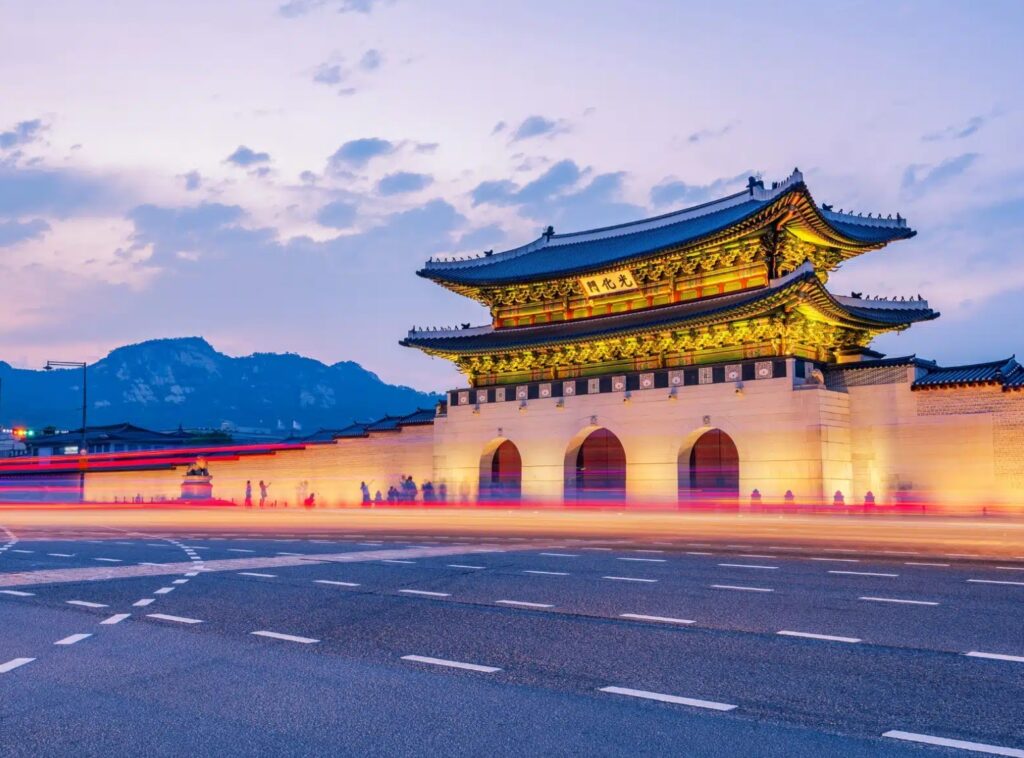
Your journey begins at Gyeongbokgung Palace — the grandest of Seoul’s five Joseon Dynasty royal palaces and the most iconic landmark in the city. Built in 1395, Gyeongbokgung served as the main palace of the Joseon Kingdom for over 500 years. Walking through its enormous main gate and into the vast palace grounds, you immediately feel the weight of history all around you.
What to See Inside
Geunjeongjeon (근정전) — The main throne hall, used for royal ceremonies and the reception of foreign envoys. The stone-paved courtyard in front is one of the most impressive open spaces in Korea.
Gyeonghoeru Pavilion (경회루) — A beautiful multi-story wooden pavilion set on an island in the middle of a lotus pond. One of the most photographed spots in Seoul. Special interior tours are available by advance reservation (see below).
National Folk Museum of Korea — Located within the palace grounds, this museum offers fascinating exhibits on traditional Korean daily life. Free with palace admission.
Royal Guard Changing Ceremony
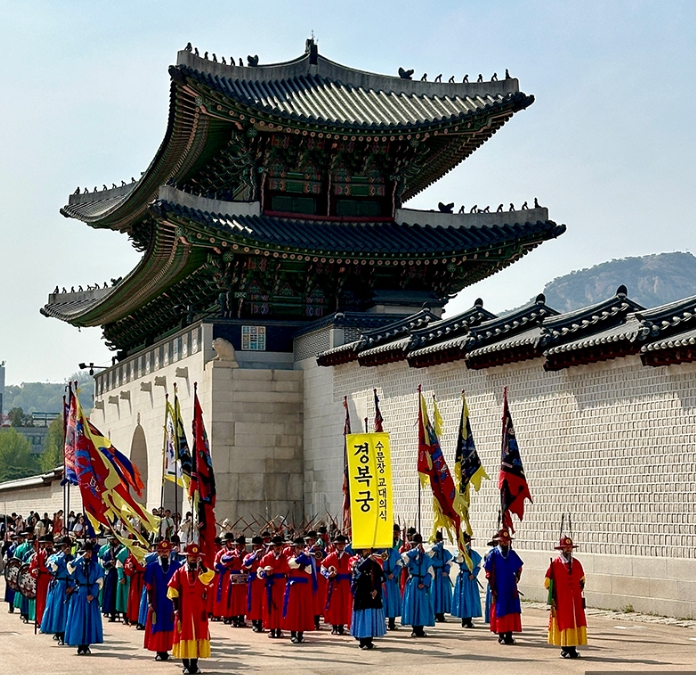
One of the most memorable free experiences at Gyeongbokgung is the Royal Guard Changing Ceremony, held since 2002 and based on records from the Joseon Dynasty’s Annals.
The ceremony recreates the elaborate ritual of the Joseon royal guard — with the royal gate commander (수문장), his deputy, and fully costumed soldiers in period-accurate uniforms and weapons. Accompanied by traditional music, the ceremony is a feast for both the eyes and the ears.
| Program | Duration | Schedule |
|---|---|---|
| Royal Guard Changing Ceremony | 20 min | 10:00 / 14:00 |
| Gwanghwamun Patrol Ceremony | 10 min | 11:00 / 13:00 |
| Royal Guard Public Training | 15 min | 09:35 / 13:35 |
- Location: Around Heungnyemun Gate, Gyeongbokgung
- Days: Monday, Wednesday–Sunday (closed Tuesdays)
- Admission: Free — no palace entry ticket required
- Photo opportunity: Before and after the ceremony, you can take photos with the royal guards. Note: touching ceremonial props or speaking to the guards is not permitted.
⚠️ Note: Ceremonies may be cancelled due to weather conditions. Check on the day before heading out.
Royal Patrol Procession (수문장 순라의식)
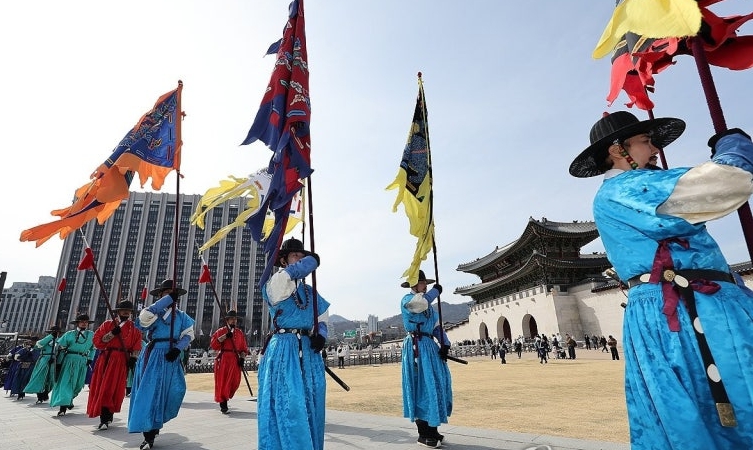
On weekends and public holidays, the palace offers an extended experience — the Royal Patrol Procession, where you can actually walk alongside 60+ costumed Joseon-era soldiers through the streets of central Seoul.
The procession begins at Gwanghwamun Square, marches through the famous Insadong cultural street, and returns to Gwanghwamun — a round trip of approximately one hour. At Buk-Insadong Plaza (안국역 6번 출구), there is a dedicated photo opportunity with the soldiers.
- Schedule: Saturdays, Sundays, and public holidays at 15:00
- Route: Gwanghwamun Square → Insadong → Buk-Insadong Plaza → Gwanghwamun Square (round trip ~1 hour)
- Admission: Free
Jibokjae Small Library
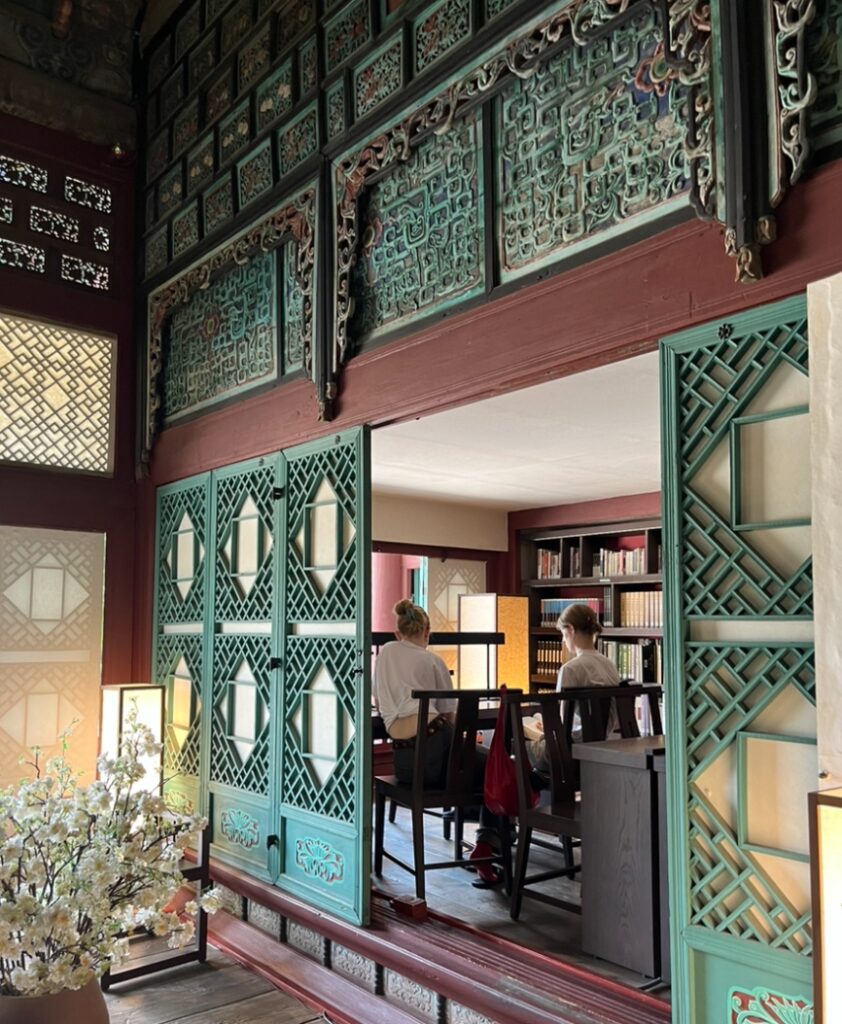
Hidden inside the palace grounds is one of Seoul’s most atmospheric reading spaces — Jibokjae, originally built as King Gojong’s personal study and reception hall for foreign envoys.
Now open to the public as a small library, Jibokjae houses royal Joseon documents, historical texts, and books on Korean history, art, and literature. The interior ceiling is adorned with painted phoenixes and peonies — making it as beautiful to look at as it is peaceful to sit in.
Next to Jibokjae, a covered corridor leads to Palwujeong Pavilion (팔우정), a charming octagonal structure perfect for a quiet rest.
- Location: Inside Gyeongbokgung Palace grounds
- Hours: Monday, Wednesday–Sunday, 10:00–16:00 (closed Tuesdays and July–August)
- Admission: Free (standard palace entry fee applies)
- Note: Books are for reading on-site only — no borrowing permitted
Gyeonghoeru Pavilion Special Tour
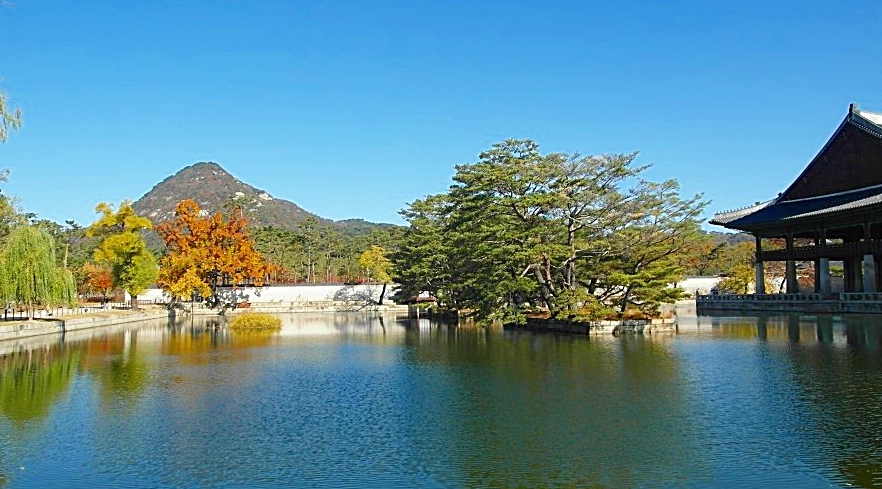
For an unforgettable inside view of the palace, book a spot on the Gyeonghoeru Pavilion Special Tour — one of Seoul’s most sought-after cultural experiences.
During the tour, a guide leads small groups (maximum 35 people) through the pavilion’s ground floor stone columns and up into the second-floor interior — a space rarely seen by the public. From the upper level, panoramic views of Bugaksan, Inwangsan, and Namsan mountains spread out in every direction alongside the palace rooftops.
- Season: Spring (May–June) and Autumn (August–October)
- Times: 10:00 / 11:00 / 14:00 / 16:00
- Admission: Free (standard palace entry fee applies)
- Age restriction: Children aged 6 and under cannot participate for safety reasons
- Reservation: Opens 7 days before each tour date via the Royal Palace and Tomb Management Office website (35 spots per session, first-come first-served)
- Note: Indoor slippers are provided — shoes must be removed before entering
💡 Tip: Gyeonghoeru Special Tour reservations fill up extremely quickly. Set a reminder for the reservation opening date (7 days in advance) and book the moment slots open.
The Hanbok Experience
Renting a hanbok (traditional Korean dress) from one of the many shops near the palace entrance grants free admission to the palace and creates beautiful photo opportunities throughout the grounds.
📸 Photo Tip: The best palace shot is from the area in front of Geunjeongjeon looking north toward the mountains. Arrive early for the scene without crowds. For the Royal Guard Ceremony, position yourself near Gwanghwamun Gate before the ceremony starts to secure a front-row spot.
Getting There
- Subway: Gyeongbokgung Station (Line 3), Exit 5
Stop 2: Gwanghwamun Square — The Heart of Modern Seoul
Time needed: 30–45 minutes Admission: Free
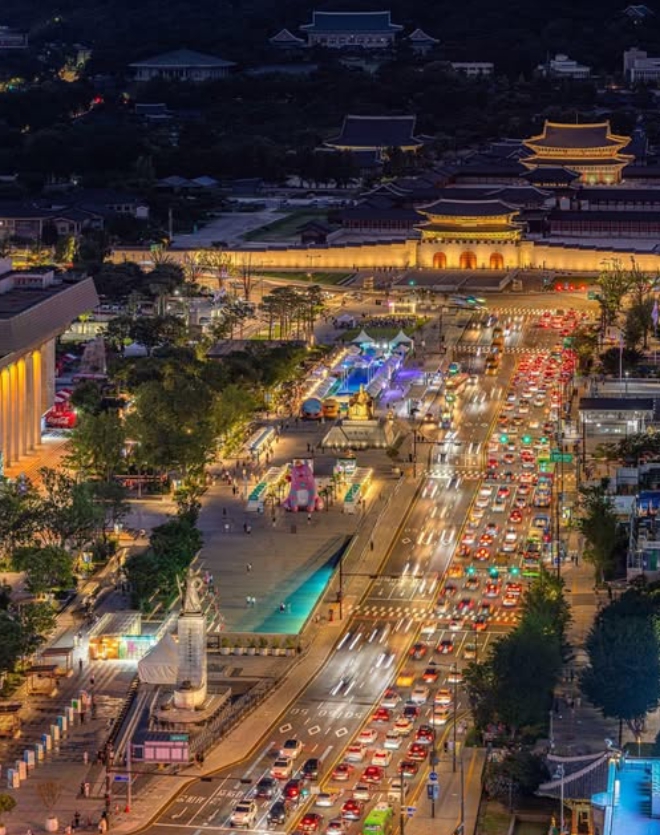
Step out of the palace’s south gate and you find yourself transported — almost instantly — into a completely different Seoul. Gwanghwamun Square is the symbolic center of modern Korea: a sweeping urban plaza flanked by grand government buildings and corporate headquarters.
The contrast with Gyeongbokgung is striking and intentional. Here, the scale is metropolitan rather than imperial, the pace faster, the energy more contemporary.
What to See
Statue of King Sejong the Great — The massive bronze statue of Korea’s most beloved monarch, inventor of Hangeul (the Korean alphabet), stands at the center of the square. An underground exhibition space beneath tells the story of his remarkable legacy.
Statue of Admiral Yi Sun-sin — A towering bronze figure of the 16th-century naval commander credited with repelling Japanese invasions. One of the most recognizable images in Seoul.
Gwanghwamun Gate (광화문) — The grand ceremonial gate of Gyeongbokgung, recently restored to its full original glory. From the square with the palace and mountains behind, it represents the visual link between Seoul’s historical past and dynamic present.
📸 Photo Tip: Stand at the far south end of the square and look north — you’ll get Gwanghwamun Gate, Gyeongbokgung Palace, and Bugaksan Mountain all perfectly aligned in one frame. This is the quintessential Seoul photograph.
Stop 3: Sejong Village (Seochon) — Seoul at Its Most Livable
Time needed: 1.5–2 hours (or as long as you like) Admission: Free
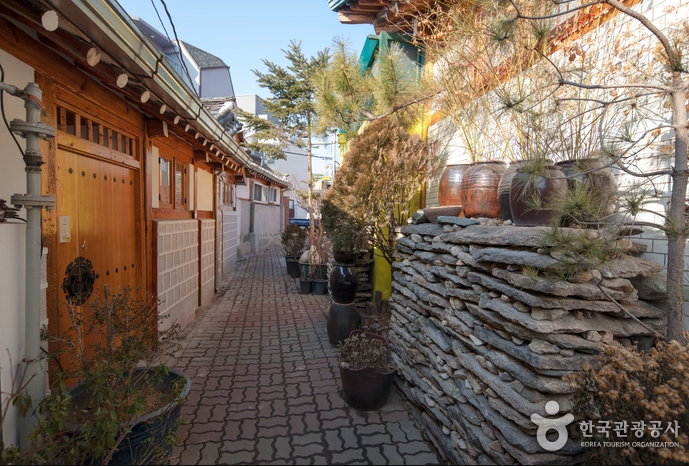
Just a short walk west of Gwanghwamun lies Sejong Village — known locally as Seochon (서촌), meaning “West Village.” This is where the pace of the day shifts completely.
Sejong Village is not a tourist attraction in the conventional sense. It is a real, living neighborhood where people actually live, work, and go about their daily lives in houses that in some cases have stood for centuries. Unlike the more commercialized Bukchon Hanok Village nearby, Seochon has maintained an authentic, unhurried atmosphere that feels genuinely local — making it a welcome relief for travelers who are tired of overly polished tourist spots.
As soon as you enter the winding alleyways, something changes. The streets narrow, the noise of the city fades, and without even thinking about it, you slow down. Every turn reveals a tiny bookshop, an independent gallery, a handmade ceramics studio, or a café tucked inside a century-old Korean house.
The Sejong Village Food Culture Street (세종마을 음식문화거리)
The Food Culture Street is the heart of the neighborhood’s culinary scene — a mix of traditional Korean eateries, modern fusion restaurants, and specialty coffee shops that makes it one of the best places in Seoul to graze, snack, and linger over a meal.
🛒 Local Recommendation: While in Sejong Village, don’t miss Tongin Market (통인시장), just steps away from the main alleyway. Here you can buy traditional lunchbox items using old brass coins called Yeopjeon (엽전) — a fun and delicious way to experience authentic local market culture. It’s one of those uniquely Korean experiences that visitors remember long after leaving.
The Philosophy of Slow Travel
What makes Sejong Village the perfect end to this walking route is its invitation to slow down. This isn’t a place you rush through — it’s a place where an hour disappears inside a single café, where a conversation with a local shopkeeper becomes the best part of your day, and where the absence of a strict itinerary suddenly feels like freedom rather than a lack of planning.
Navigating the narrow alleys of Seochon is much easier with Naver Maps. We recommend downloading it from our Essential Korea Travel Apps list before heading out.
📸 Photo Tip: Late afternoon light filtering through the traditional tiled rooftops is especially atmospheric. Look for the small street art installations and hand-painted signs that give the neighborhood much of its visual character.
Recommended Experiences
- Browse independent bookshops and art galleries along the main alleyway
- Visit a traditional hanok café — many historic houses have been lovingly converted
- Try the Yeopjeon coin lunchbox experience at Tongin Market
- Visit the Gyeomjae Jeong Seon Gallery, dedicated to the Joseon-era painter who lived here
- Simply walk without a map — the best discoveries are unplanned
The Full Route at a Glance
| Stop | Highlight | Time Needed | Cost |
|---|---|---|---|
| Gyeongbokgung Palace | Royal palace, Guard ceremony | 1.5–2 hrs | ₩3,000 (free with hanbok) |
| Gwanghwamun Square | King Sejong statue, gate views | 30–45 min | Free |
| Sejong Village + Tongin Market | Local alleyways, food street | 1.5–2 hrs+ | Free to explore |
Total walking distance: Approximately 2–3 km between all stops Recommended start time: 9:00 AM at Gyeongbokgung
Practical Tips
Wear comfortable shoes — palace grounds and village alleyways involve a lot of walking on uneven stone surfaces.
Carry some cash — many smaller shops and eateries in Sejong Village are cash-preferred. The Yeopjeon coin experience at Tongin Market also requires cash.
Combine with Bukchon Hanok Village — if you have extra time, Bukchon is a short walk east from Gyeongbokgung and pairs beautifully with this route.
Getting there and around — A T-money card is all you need for subway and bus travel. iPhone users should check our T-money iPhone guide before heading out.
FAQ
How long does this full walking route take? Allow a full day — roughly 5–6 hours at a relaxed pace including meals and photo stops. You can easily extend if you linger in Sejong Village or visit Tongin Market.
Is Gyeongbokgung Palace free to enter? Standard adult admission is ₩3,000 (approximately $2 USD). Visitors wearing hanbok enter for free.
What is the best day to visit? The palace is open Tuesday through Sunday (closed Mondays). Tuesday through Thursday mornings are typically quietest. Avoid national holidays when crowds peak.
Can I do this route in reverse? Yes — starting at Sejong Village in the morning and ending at Gyeongbokgung for the afternoon light is equally enjoyable and may be less crowded at the palace.
Are there English signs at the palace? Yes — Gyeongbokgung has excellent English signage throughout. Free English-language guided tours are also available at set times — check the palace website for the current schedule.