
A Paju DMZ day trip is one of the most unusual experiences you can have in Korea — and the version centered on the Imjingak Peace Gondola is genuinely under-known among English-speaking travelers. While most DMZ tours take visitors to the famous Third Infiltration Tunnel and Dora Observatory by tour bus, this route lets you ride a cable car across the Civilian Control Line into Camp Greaves — a former US Army base, the filming location for the K-drama Descendants of the Sun, and the only place where ordinary visitors can enter the controlled zone without joining a formal tour. Here’s how to do it, what you’ll actually see, and how it compares to the standard DMZ day trip.
Quick Answer
Take the Gyeongui-Jungang subway line from Seoul to Imjingang Station (about 70 minutes from central Seoul). Walk 8 minutes to the Imjingak Tourist Complex. Buy a Peace Gondola ticket (₩15,000 adult, crystal cabin) and bring your passport — required to enter the Civilian Control Zone. The gondola crosses 850 meters over the Imjin River to Camp Greaves, where you can visit Gallery Greaves and walk a small section of the controlled zone before riding back. Total time: half a day. You can be back in Seoul by mid-afternoon.
Real Prices — April 2026
Imjingak Peace Gondola round-trip: General cabin ₩12,000 adult / ₩10,000 child & senior. Crystal cabin (glass floor) ₩15,000 adult / ₩13,000 child & senior. Group rate (20+) slightly lower. Imjingak Park itself: free. Subway from Seoul: about ₩2,000–3,000. Guided DMZ day tour from Seoul (alternative): $50–110 depending on inclusions.
The crystal cabin is worth the extra ₩3,000 if you want the best views and photos.
First, Some Geography (This Matters)
Most travel guides use “DMZ” loosely. Knowing the actual distinctions will help you understand what you’re seeing and pick the right experience for what you want:
- The DMZ proper — A 4-kilometer-wide buffer zone running across the Korean Peninsula along the Military Demarcation Line. Civilians cannot enter without specific authorization. The famous Joint Security Area (JSA / Panmunjom) is inside the DMZ, accessible only via official military-supervised tours.
- The Civilian Control Zone (CCZ) — A buffer area south of the DMZ where civilian access is restricted but possible with ID and a permit. This is where the Third Infiltration Tunnel, Dora Observatory, and Camp Greaves are located.
- Imjingak Tourist Complex — A public park south of the Civilian Control Line, about 7 kilometers from the Military Demarcation Line. Free to enter, no ID required. Built to console families displaced by the Korean War.
The Peace Gondola is interesting precisely because it bridges these zones — you start at Imjingak (the public park), and the cable car carries you across the Civilian Control Line into Camp Greaves (inside the CCZ). It’s the only gondola in Korea that crosses into a controlled zone, and one of the few ways for ordinary visitors to step into the CCZ without joining a structured tour.
Important: You will not see North Korea up close from the gondola or Camp Greaves. For that, you need a separate DMZ tour that includes Dora Observatory. The Peace Gondola experience is about crossing into the controlled zone and visiting Camp Greaves — historically and visually meaningful, but not the same as “looking into North Korea.”
The Imjingak Peace Gondola
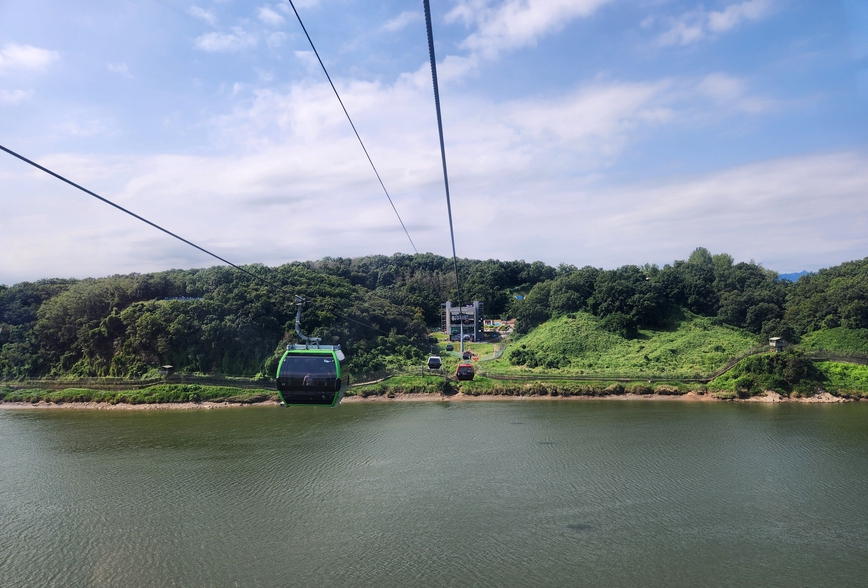
Completed in 2020, the Imjingak Peace Gondola was Korea’s first gondola line to cross the Civilian Control Line. The ride is short — just 850 meters — but the geography is what makes it remarkable. You glide over the Imjin River, with barbed wire fences and old railway remnants visible below. Each cabin holds up to 10 passengers, and a portion of the cabins are crystal cabins with a transparent glass floor for unobstructed views.
Practical info:
- Ticket prices: General cabin ₩12,000 adults / ₩10,000 children & seniors. Crystal cabin (glass-floor) ₩15,000 adults / ₩13,000 children & seniors. Round-trip in both cases.
- Hours: Weekdays 9:00 AM–6:00 PM (last ticketing 5:30 PM); weekends and public holidays 9:00 AM–7:00 PM (last ticketing 6:30 PM). Last ticketing is 30 minutes before closing — don’t cut it close.
- Closed: May close in severe weather (storms, heavy rain, fog, high winds).
- Required to bring: Passport for foreigners (Korean ID for residents). You’ll also need to fill out a brief security pledge before crossing into the controlled zone.
- Booking: Same-day tickets are usually available, but crystal cabins are limited and popular on weekends — arrive early or pre-book via Klook or KKday, both of which have foreigner-friendly booking flows.
Photography note: Photos and videos from inside the cabin are fine for most of the ride, but photography is restricted near military installations and certain fence sections — staff and signs will indicate where. Don’t try to film through the windows when crossing those zones.
Camp Greaves: The Former US Army Base
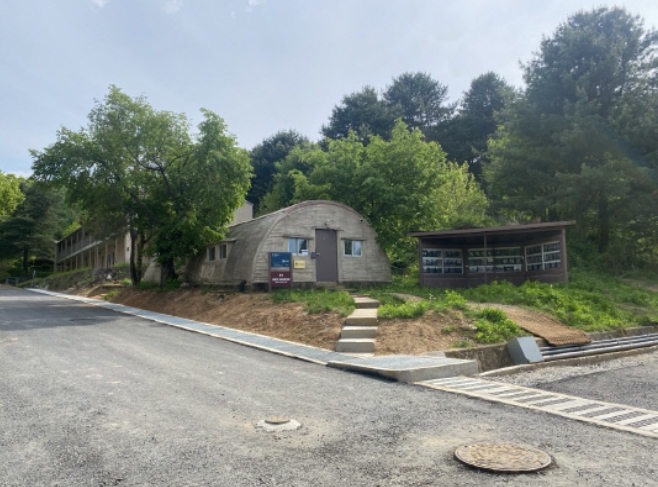
When you step off the gondola on the north side of the river, you’re inside Camp Greaves — a former US Army base that housed the 506th Infantry Regiment of the US 2nd Infantry Division for roughly 50 years after the 1953 Korean War Armistice Agreement. The American troops left in 2007, and the South Korean government converted the site into a peace and culture complex. Today it operates as a youth hostel, exhibition space, and cultural arts venue.
For most visitors, the highlights are:
- Gallery Greaves — The main exhibition space, set inside what used to be the base bowling alley. Now home to rotating exhibits about the Korean War, division, and reunification, plus video installations and personal artifacts. Genuinely moving for visitors who want to engage with the war’s legacy beyond a checklist of monuments.
- Descendants of the Sun filming sites — The 2016 K-drama starring Song Joong-ki and Song Hye-kyo used Camp Greaves as one of its main locations. Several spots around the camp are still recognizable to fans, and the site has become an informal pilgrimage destination for K-drama tourists from across Asia and beyond.
- Observation points — Two designated observatories within the complex offer panoramic views of the Jangdan Peninsula, Bukhansan Mountain in the distance, and the Imjingak skyline back across the river. On clear days the visibility extends well into the controlled zone.
- Uniform try-on and dog tag making — Small experiential activities you can pay extra for. Touristy but genuinely fun and a good photo souvenir.
Access within Camp Greaves has expanded significantly in 2024–2025. As of 2026, more of the former base — including additional exhibition buildings such as the old ammunition depot — has been opened to the public compared to previous years. Roughly ten structures are now accessible to gondola visitors. Stay on designated paths; the surrounding area is still under military jurisdiction and unmarked sections may be off-limits.
Imjingak Park: What to See on the South Side
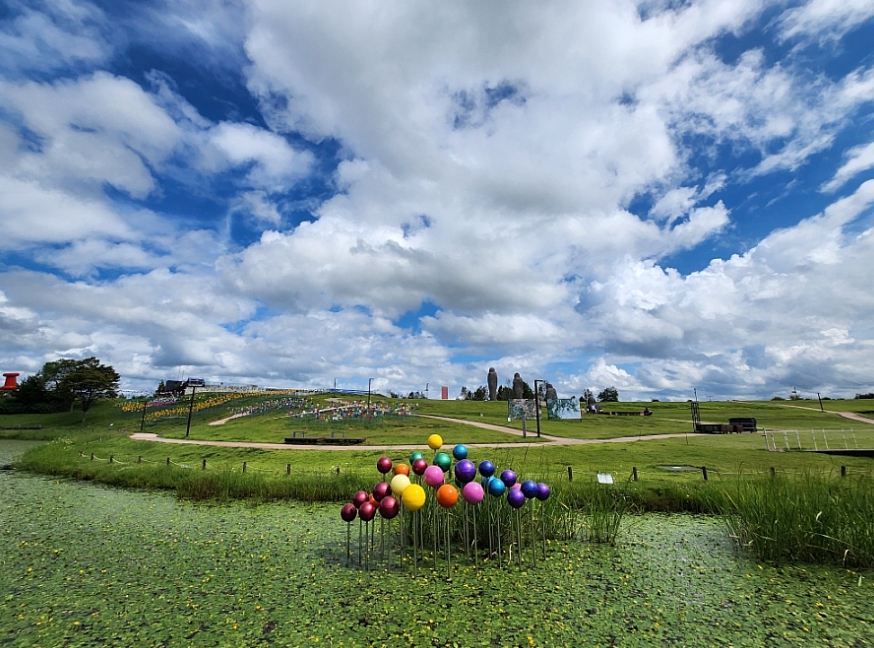
Before or after your gondola ride, spend some time in Imjingak Park itself. It’s free, open 24 hours, and packed with monuments and memorials that the gondola alone doesn’t cover:
- Freedom Bridge — A short wooden bridge built in 1953 to repatriate prisoners of war after the Korean War Armistice. Visitors leave handwritten messages and ribbons of hope tied to the fence at the bridge’s end.
- Mangbaedan Memorial Altar — A memorial where displaced Koreans from the North have, for decades, performed ancestral rites on Lunar New Year and Chuseok by bowing toward their hometowns. Quietly emotional.
- Peace Bell — A large bronze bell built in 2000, rung annually on New Year’s Eve as a wish for peace and reunification.
- Dokgae Bridge Skywalk — A modern skywalk built atop the piers of an original 1906 railway bridge that once connected Seoul to Pyongyang and was destroyed in the war. The skywalk is themed in three sections — past, present, and future — and gives you the closest view of the river and the controlled zone you can get without the gondola.
- Beat 131 Bunker Exhibition Hall — A small exhibition space in a converted military bunker, with displays on the area’s military history.
- The stopped train — A locomotive riddled with bullet holes from the Korean War, frozen on a section of severed railway track. Probably the most photographed object at Imjingak.
Getting from Seoul to Imjingak
Three realistic options. Imjingak is in northern Paju, about 50 km from central Seoul.
Option 1: Subway (Cheapest, Most Flexible)
- Take the Gyeongui-Jungang Line from Seoul Station, Yongsan, or Hongik University Station to Imjingang Station.
- Travel time: 60–90 minutes depending on starting station.
- Cost: About ₩2,000–3,000 with a T-money card.
- From Imjingang Station: 8-minute walk to the Imjingak Tourist Complex and gondola entrance.
Trains to Imjingang Station don’t run as frequently as central Seoul lines — typical interval is 30–60 minutes, less frequent during off-peak times. Check the Naver Map app for live departure times and plan your trip around them.
Option 2: Bus from Seoul
Bus 7300 (express) from Seoul’s Gimchon area runs directly to Imjingak. Local buses 93-9 and 058 also serve the area from Munsan. Travel time is comparable to the subway, and fares are similar. Useful if your starting point in Seoul is closer to a bus stop than a Gyeongui-Jungang Line station.
Option 3: Guided DMZ Tour from Seoul
If you want to combine Imjingak and the Peace Gondola with the famous DMZ-proper attractions in a single day, book a tour. Typical packages include:
- $50–60 base tours — Imjingak Park + Third Infiltration Tunnel + Dora Observatory + Unification Village. Gondola is usually an optional add-on.
- $80–110 premium tours — All of the above plus Camp Greaves and the Peace Gondola included.
Tours bundle the bureaucracy (CCZ permits, schedules, passport checks) and add an English-speaking guide. The trade-off is less flexibility and a tighter schedule. For first-time visitors who want the full DMZ experience in one day, the premium tour is worth the cost. For travelers who specifically want the gondola experience and don’t need the Third Tunnel, going independently saves significant money.
Should You DIY or Book a Tour?
Here’s an honest comparison:
Go DIY (subway + on-site gondola tickets) if:
- You want a slower, more reflective half-day experience.
- You’re focused on Imjingak Park, the gondola, and Camp Greaves — and don’t need the Third Tunnel or Dora Observatory.
- You’re comfortable navigating Korean public transit (or you’ve used Naver Map before).
- You want to keep total costs under ₩30,000 per person.
Book a guided tour if:
- You want to see the Third Infiltration Tunnel and Dora Observatory in the same day.
- It’s your first time in Korea and the logistics feel overwhelming.
- You want the historical context that a knowledgeable guide provides — many DMZ tour guides are former military or have extensive knowledge of the area’s history.
- You’re traveling with family or older relatives who’d benefit from the door-to-door convenience.
A Realistic Half-Day DIY Itinerary
Here’s how the independent version typically plays out:
- 8:30 AM Subway from Seoul Station to Imjingang Station
- 10:00 AM Arrive Imjingang Station, walk to Imjingak Park
- 10:15 AM Explore Freedom Bridge, Mangbaedan, the stopped train, Peace Bell
- 11:15 AM Walk the Dokgae Bridge Skywalk
- 11:45 AM Buy gondola ticket, fill out security pledge
- 12:00 PM Board gondola, cross to Camp Greaves
- 12:15 PM Visit Gallery Greaves, walk Descendants of the Sun filming spots
- 1:30 PM Take in observation points, optional uniform try-on
- 2:30 PM Return gondola back to Imjingak side
- 3:00 PM Late lunch at Imjingak Tourist Complex (multiple restaurants)
- 4:00 PM Subway back to Seoul
If You Have More Time in Paju
Paju is large, and Imjingak is just one corner of it. If you finish the gondola experience early and want to extend the day, two stops are worth knowing about:
- National Folk Museum of Korea (Paju Branch) — About 25 minutes south of Imjingak by car. A free, modern museum with a massive open-storage exhibition wing — you can literally see the museum’s archived collections through glass-walled vaults. Especially good on rainy days. Closed Mondays.
- Heyri Art Village — An artist-built community of small museums, galleries, and cafes located right next to the Folk Museum. The Korean Modern History Museum (recreated 1950s–early 2000s street scenes) and the curiously specific Coca-Cola Museum are both popular with visitors. Most galleries charge ₩5,000–7,000 entry, and you can easily spend half a day exploring.
If you have a car or are willing to taxi between sites, doing Imjingak in the morning and Heyri in the afternoon makes a balanced day — the heavy emotional content of the DMZ-area history paired with the lighter, more creative atmosphere of the art village.
When to Visit
- Spring (April–May): Mild and clear. The most pleasant weather for the outdoor portions of Imjingak Park.
- Summer (June–August): Hot and humid. The gondola provides relief, and Gallery Greaves is air-conditioned, but the open-air park sections can be uncomfortable midday.
- Autumn (October–November): Best season. Crisp air, autumn foliage along the river, and clear visibility for both the gondola views and observatories.
- Winter (December–February): Quiet and atmospheric. The gondola occasionally pauses for high winds, so check operating status before traveling. The Korean War history hits differently when it’s actually cold.
Practical Tips for Foreign Travelers
- Bring your physical passport — no exceptions. Photos, photocopies, and digital scans are not accepted. The CCZ access requires actual passport verification by gondola staff, and there’s no workaround. Travelers without a physical passport will be turned away.
- Dress respectfully. Camp Greaves is a memorial site as much as a tourist attraction. Avoid clothing with political slogans or military imagery — staff occasionally turn people away for inappropriate dress.
- Don’t expect to see North Korea. The gondola gives you views of the river, fences, and southern CCZ landscape. For actual cross-border views, you need a tour that includes Dora Observatory.
- Photography rules vary by zone. Outside fences and military installations, photography is fine. When you cross into restricted sections, follow the staff’s instructions — fines are theoretical but compliance is expected.
- The gondola can close on short notice. Strong winds, fog, or military activity can suspend operations. If your trip is weather-dependent, call ahead or check the Visit Korea English site for status updates.
- Lunch options on-site are limited. The Imjingak Tourist Complex has several restaurants and convenience stores, but quality is variable. If you’re picky about food, eat before you arrive or bring snacks.
- This is a meaningful experience, not a thrill ride. Set expectations accordingly. Visitors who arrive expecting a typical tourist attraction sometimes leave disappointed; visitors who arrive understanding the historical weight of the site usually leave moved.
- Mondays and some public holidays: Many full DMZ tours change their itinerary or cancel certain stops (the Third Tunnel and Dora Observatory are sometimes restricted), but the Peace Gondola usually operates normally. If your trip falls on one of these days, the gondola is often the more reliable option.
The Bottom Line
The Imjingak Peace Gondola is the most accessible way to step into Korea’s controlled border zone without the bureaucracy of a full DMZ tour. You won’t see North Korea up close, but you’ll cross into a place very few foreign travelers reach independently — a former US military base turned peace memorial, a K-drama landmark, and a quiet reminder of a war that technically never ended. Pair it with Imjingak Park’s monuments and you have a half-day experience that’s hard to find anywhere else in the world.