Most foreign visitors to Korea know Pyeongchang as one word: Olympics. The 2018 Winter Olympics put this small mountain town on the global map, and then most people forgot about it. That’s a missed opportunity — Pyeongchang has some of the best mountain scenery in Korea, year-round, and there’s a relatively new program that lets foreign tourists access discounts of up to 30% on cable cars, attractions, restaurants, and experiences just for signing up.
The program is called the Digital Tourism Pass (디지털 관광주민증), and as of 2025 it’s officially open to foreign visitors. It’s free, takes about 5 minutes to set up, and covers 44 designated regions across Korea including Pyeongchang. Here’s how to use it for a 1-night weekend trip that combines Korea’s “Switzerland” landscape with real, working discounts.
Quick Facts
- Best for: Foreign visitors who want mountain landscapes within 2–3 hours of Seoul
- Trip length: 1 night / 2 days (can extend to 2 nights)
- Highlight: Balwangsan Cable Car — Korea’s longest (7.4 km) and highest (1,458 m)
- Digital Tourism Pass: Free, takes 5 min to register, discounts up to 30%
- From Seoul: ~2 hours by KTX, ~3 hours by intercity bus
- Best months: June–October (alpine landscape), December–February (snow scenery)
- Budget: ~₩200,000–300,000 ($150–225) per person for 1 night with discounts applied
What Is the Digital Tourism Pass?
The Digital Tourism Pass is a Korea Tourism Organization initiative designed to drive visitors to less-traveled regions outside Seoul, Busan, and Jeju. It’s essentially a free digital membership card that gives you discounts at participating businesses in 44 designated regions — most of them rural, mountain, or coastal areas that have struggled with population decline.
For foreign visitors, the practical benefits are concrete:
- Up to 30% off attraction entry (cable cars, observatories, experience programs)
- Discounts at local restaurants and cafés
- Discounts on local product purchases (regional specialties, traditional crafts)
- Sometimes free admission to museums or cultural sites
Pyeongchang is one of the strongest participating regions for foreign visitors, with discounts available across most major attractions — including the headline Balwangsan Cable Car.
How to Get the Pass (Foreign Visitor Version)
The process is straightforward but Korean-language first. Use a translation tool:
- Go to the Visit Korea official site at korean.visitkorea.or.kr (browser auto-translate handles the rest)
- Look for “디지털 관광주민증” or “Digital Tourism Pass” — there’s a dedicated section
- Sign up via email or social login (Google, Apple, KakaoTalk all work)
- Verify with your passport (foreign visitor option) or Alien Registration Card if you have one
- Select the regions you want — choose Pyeongchang for this trip (you can add multiple)
- You’ll receive a digital QR code stored in your account
- At participating businesses, just show the QR code before payment
Languages supported: Korean, English, Chinese. The English interface exists but coverage is uneven — some discount details may only be in Korean. Browser auto-translate fills the gaps.
Cost: Free, no fees ever. The program is government-funded as a regional economy initiative.
Day 1 — Balwangsan Cable Car and the Mountaintop
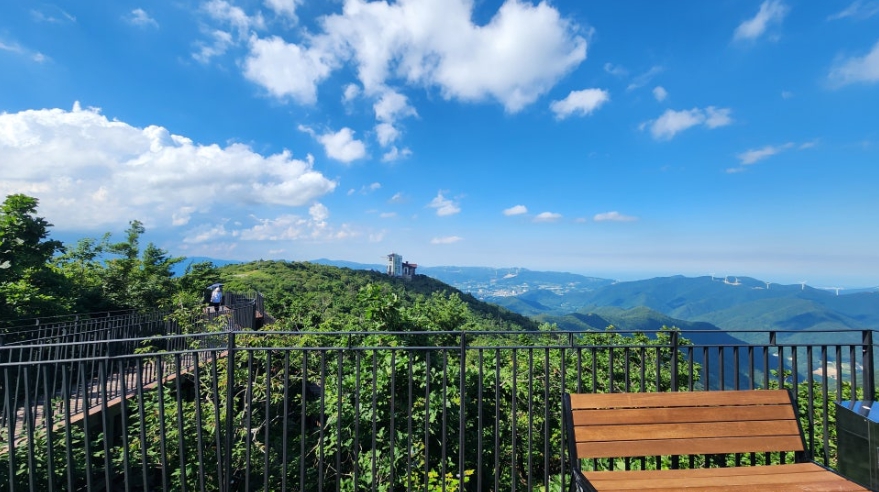
The single experience that justifies a trip to Pyeongchang is the Balwangsan Cable Car (발왕산 관광케이블카). This is not a small thing — it’s the longest cable car in Korea at 7.4 km round-trip and reaches 1,458 meters at the summit. The ride up takes 18 minutes; round-trip with time at the top runs about 40 minutes.
Balwangsan Cable Car — What’s Included:
- 8-passenger cabins — 100 cabins running continuously on the line
- “Ki” Skywalk at the summit — a transparent observation deck with 360° views (included in round-trip ticket, no extra fee)
- Cheonnyeon Juwok Forest Walk — gentle deck path through ancient yew trees at the summit, suitable for all ages
- Balwangsu Garden — a small spot where you can taste mineral spring water
Getting there: The cable car departs from Dragon Plaza at Yongpyong Resort. From Pyeongchang Station (KTX), it’s about 30 minutes by taxi or local bus. From central Seoul, plan on about 2.5 hours total via KTX + taxi.
Why locals call it “Korea’s Switzerland”: The summit views look across the Baekdu-daegan mountain range — Korea’s main mountain spine. On clear days, you can see ridge after ridge of peaks stretching to the horizon. The combination of alpine terrain, dramatic elevation, and the long cable car ride genuinely echoes Swiss mountain railways, even though the scale is smaller.
Weather warning: Mountain weather changes fast. Cable car operations can pause without notice for strong wind, lightning, or low visibility. Call ahead the morning of your visit (the resort line has English support) or check the Yongpyong Resort website for real-time operational status.
Where the Discount Applies
Standard adult round-trip cable car tickets are around ₩28,000–30,000 ($21–22 USD). With the Digital Tourism Pass discount (up to 30% off), this drops to roughly ₩20,000–21,000 ($15–16). Show the QR code at the ticket counter before payment.
Day 1 Continued — Lunch at the Resort and Mountain Coaster
Yongpyong Resort surrounds the cable car base station, so lunch and afternoon activities are all on the resort grounds — no need to drive elsewhere.
Mountain Coaster: If you’ve ever ridden an alpine slide in Switzerland or Austria, this is the same experience. A gravity-powered cart on a winding track running down a forested mountain slope. The Pyeongchang version is well-maintained and family-friendly — both kids and adults can ride. The discount applies here too if you have the Tourism Pass.
Lunch options: Pyeongchang’s signature food is memil (buckwheat) — the region is one of Korea’s main buckwheat-producing areas, immortalized in the classic Korean short story “When the Buckwheat Blooms” (Memilkkot Pil Muryeop) by Yi Hyo-seok. Look for restaurants serving memil-guksu (cold buckwheat noodles), memil-jeon (buckwheat pancakes), or memil-makguksu (mixed cold noodle bowl). Buckwheat is naturally gluten-free and digests easily, even after a large meal.
Daegwallyeong Hanu (대관령 한우) — the local Korean beef variety raised at high altitude — is another Pyeongchang specialty. Several restaurants near the resort serve it as Korean barbecue, and some offer Tourism Pass discounts on signature items like Hanu burgers or set menus.
Day 1 Evening — Where to Stay
Pyeongchang has accommodation across the full price range:
- Yongpyong Resort hotels: Convenient if you’re already at the cable car base. Range from ₩150,000 ($112) for basic rooms to ₩300,000+ ($225+) for suites.
- Alpensia Resort: The 2018 Olympics village area. Several hotel brands, some pension-style accommodations. Often runs deals through Korean booking sites.
- Local pensions and guesthouses: Around Daegwallyeong area — the highland pasture region. More rustic, often family-run, ₩80,000–150,000 ($60–112) range. Best for travelers wanting countryside atmosphere.
Korean booking sites (Goodchoice 여기어때, Naver) tend to have better local pension coverage than international platforms. Booking.com and Agoda cover the major resort hotels well.
Day 2 — Pasture Views and Cave Exploration
Day 2 in Pyeongchang is about getting away from the resort and into the surrounding landscape. Three options worth considering, pick based on your interests:
Option A — Samyang Highland Pasture (삼양목장)

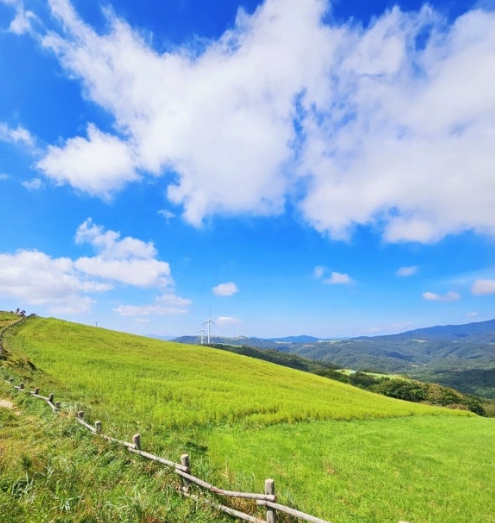
A working ranch at over 1,000 meters elevation, originally established to supply beef to the Samyang Ramyeon company. It’s now also Korea’s largest open-range pasture and one of the most photographed landscapes in the country — rolling green hills (in summer) or snow-covered ridges (in winter) with cattle, sheep, and the occasional wind turbine in the distance.
The “Sannomi” Pasture observation point is the postcard view. Access is by shuttle bus from the ranch entrance — driving up the ranch roads in your own vehicle is restricted.
Best for: Families, photographers, anyone who wants the iconic “Korean Switzerland” landscape photo.
Option B — Baengnyongdong Cave (백룡동굴) — Adventure Caving
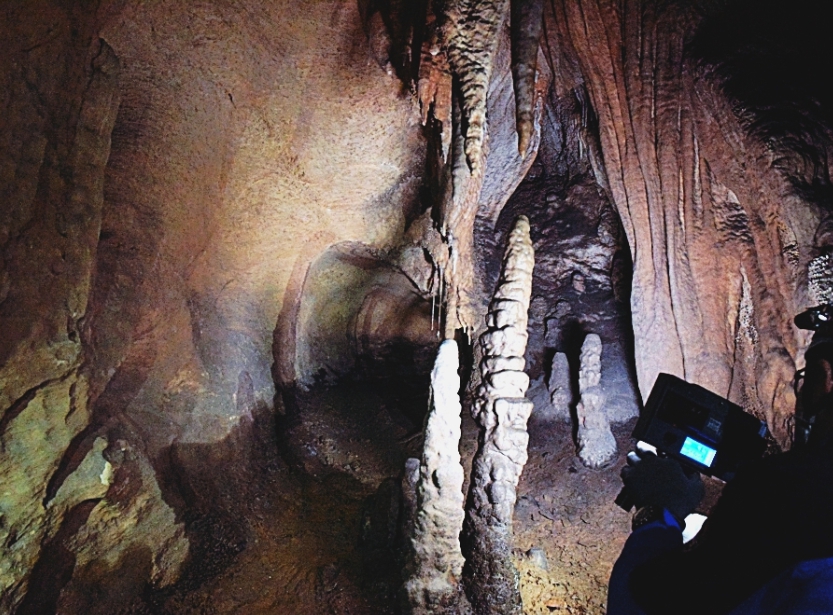
This is Korea’s first adventure-type caving experience — meaning you actually crawl, climb, and squeeze through narrow passages with a guide rather than just walk through illuminated tunnels. Helmets, lights, and protective suits are provided.
Located in nearby Jeongseon County (close enough to combine with Pyeongchang in a 2-day trip), Baengnyongdong is a designated natural monument with crystal formations and underground rivers. The full tour runs roughly 90 minutes underground.
Requirements: Reasonable physical fitness, no claustrophobia, ability to crouch and crawl in tight spaces. Not suitable for very young children, anyone with mobility issues, or larger frames that won’t fit through narrow passages. Advance reservation required — they limit group sizes.
Best for: Adventurous travelers, anyone who wants a Korean experience that isn’t in standard guidebooks.
Option C — Ginseng Harvest Experience (산양삼 체험)
Pyeongchang’s mountains are one of Korea’s main areas for cultivating sanyangsam — wild-mountain ginseng, which differs from the more familiar farmed ginseng (insam). Several farms offer hands-on harvesting experiences where you dig up ginseng plants yourself and take them home.
It’s a quintessentially Korean countryside experience — quietly walking through cool mountain forest, learning to identify ginseng leaves, and taking home a small ginseng plant you found yourself. Experience fees are around ₩30,000–50,000 ($22–37) per person, and the Tourism Pass discount can bring this down 20–30%.
Best for: Travelers interested in Korean herbal traditions, slow-travel experiences, or unusual souvenirs to bring home.
Day 2 — Suspension Bridge or Return Trip
If you have late afternoon time before heading back to Seoul, consider stopping at one of Pyeongchang or nearby Jeongseon’s suspension bridges. The most popular is the swaying suspension bridge at Jayeon Village (자연마을 출렁다리) — a genuinely shaky pedestrian bridge over a river valley, providing both views and a small adrenaline rush.
From Pyeongchang back to Seoul:
- KTX: Pyeongchang Station to Seoul Station, ~2 hours, ₩30,000–35,000 ($22–26)
- Intercity bus: Pyeongchang Bus Terminal to Seoul Express Bus Terminal, ~2.5–3 hours, ₩15,000–20,000 ($11–15)
When to Visit
Summer (June–August): Pyeongchang sits at high elevation and is significantly cooler than Seoul — sometimes 5–8°C lower. This makes it one of Korea’s most popular summer getaways for locals escaping the heat. Lush green pastures and forests, mild temperatures even on hot days. The “Korean Switzerland” comparison is strongest in summer.
Autumn (September–October): Foliage season. The high-altitude forests turn earlier than Seoul, peaking from mid-October. Daegwallyeong area is one of Korea’s most photographed autumn destinations.
Winter (December–February): The Olympics happened here for a reason. Heavy snow, ski resort operations in full swing, the cable car running over snow-covered slopes. Visually spectacular, but be prepared for serious cold (often -10°C or lower) and possible operational interruptions for the cable car.
Spring (April–May): Quieter season. Late-blooming wildflowers in May. Cool but pleasant. Good budget option since accommodation rates drop between ski season and peak summer.
Sample 1-Night, 2-Day Itinerary
Suggested Pyeongchang Weekend (with Digital Tourism Pass):
Day 1
- 8:00 AM — Depart Seoul Station by KTX
- 10:00 AM — Arrive Pyeongchang Station, taxi to Yongpyong Resort (~30 min)
- 11:00 AM — Lunch at the resort: memil-guksu (cold buckwheat noodles)
- 12:30 PM — Balwangsan Cable Car up to the summit (show Tourism Pass for discount)
- 1:00 PM — Ki Skywalk + Yew Forest walk at summit (about 1 hour)
- 2:30 PM — Cable car back down
- 3:30 PM — Mountain Coaster (45 min, Tourism Pass discount applies)
- 5:00 PM — Check into hotel, rest
- 7:00 PM — Dinner: Daegwallyeong Hanu BBQ (Korean beef)
Day 2
- 8:30 AM — Breakfast at hotel
- 9:30 AM — Choose: Samyang Pasture (postcard views), Baengnyongdong Cave (adventure), or Ginseng Experience (slow travel)
- 1:00 PM — Lunch at a local restaurant — try memil-jeon (buckwheat pancake)
- 2:30 PM — Suspension bridge stop or local shopping (regional products often discounted with the pass)
- 4:00 PM — Taxi back to Pyeongchang Station
- 5:00 PM — KTX back to Seoul (~2 hours)
Tips for First-Time Foreign Visitors
- Get the pass before you leave Seoul. Set up the Digital Tourism Pass at your hotel the night before. On the day, you just show the QR — no scrambling with sign-up forms while standing at the ticket counter.
- Have your passport. Some venues may ask to verify foreign visitor status when applying discounts. Carry it (you should anyway in Korea).
- Cash is rarely needed at major attractions, but local pension stays and rural restaurants sometimes prefer cash. Bring ₩100,000–150,000 in cash for the trip just in case.
- Mountain weather changes fast. Layers matter. Even in summer, the cable car summit can be 10°C cooler than the base.
- Language: English signage is limited outside major attractions. Papago and Google Translate handle ordering, asking directions, and basic interaction.
- Combine with Jeonju or Gangneung: Pyeongchang pairs well with longer Korea itineraries. Jeonju (UNESCO hanok village) is south; Gangneung (East Sea coast) is about an hour east.
FAQ
Is the Digital Tourism Pass really free? Yes. It’s a government program designed to drive tourism to less-populated regions. There are no fees at any stage.
Can I use the pass across multiple regions in one trip? Yes. You can add as many participating regions as you want to your pass. If you visit Pyeongchang and then go to Jeongseon or Gangneung (both nearby participating areas), the same pass works.
What if a restaurant doesn’t seem to know about the program? The program is still relatively new and not all participating businesses display obvious signage. Show your QR before paying and ask “디지털 관광주민증 가능해요?” (digital gwangwang juminjeung ganeunghaeyo? — “Does the Digital Tourism Pass apply here?”). Translation apps handle the rest.
Is Pyeongchang too rural to navigate without Korean? No, but you’ll need translation apps and patience. The main resort areas (Yongpyong, Alpensia) have some English support. Outside the resorts, you’re in genuine countryside — beautiful but not tourist-engineered.
Can I do Pyeongchang as a day trip from Seoul? Technically yes — KTX makes it possible. But you’d lose half the day on transit, and the cable car alone takes 2+ hours. An overnight is strongly recommended.
Is Pyeongchang good for solo travelers? Yes — it’s safe, the main attractions are well-organized, and KTX access makes it accessible without a car. Solo travelers should pre-book accommodation and cable car tickets.
How does Pyeongchang compare to Jeju for foreign visitors? Different experiences. Jeju is island volcanic terrain, beach culture, and a milder climate. Pyeongchang is mainland alpine — mountain ridges, ski culture, and dramatic seasons. Both are worthwhile, but Pyeongchang is much easier to combine with a Seoul-based itinerary.
Pyeongchang sits in an awkward spot for international tourism: famous enough that you’ve heard the name (Olympics), but not on most first-trip itineraries that focus on Seoul, Busan, and Jeju. The Digital Tourism Pass partially solves the gap by making it cheaper and easier for foreign visitors to actually do the trip.
My honest recommendation: skip Pyeongchang if it’s your first trip to Korea and you only have 4–5 days. Make space for it if you’re returning, staying longer, or specifically want mountain landscapes alongside city experiences. The cable car ride alone is one of the more memorable hours you can spend in Korea — and with a free pass that cuts 30% off the ticket, the trip pays for itself in ways most weekend escapes don’t.
Pass program details, discount rates, and venue participation verified for 2026. The Digital Tourism Pass program is updated periodically — confirm specific discounts and participating venues through the official Visit Korea site before relying on them for planning. Foreign visitor eligibility expanded in 2025 and continues to broaden.