A week is, in my experience, the sweet spot for a first Korea trip — and this Seoul itinerary is the one I find myself recommending most often. Less than that and you’re racing through the highlights; more than that and you start running out of “must-see” obligations and either need to slow down or add a regional trip. Seven days in Seoul, structured well, gives you time to eat properly, do cafe culture justice, see two or three neighborhoods deeply rather than five neighborhoods superficially, and still have one or two flexible afternoons.
This itinerary is the one I find myself recommending most often to friends visiting for the first time, especially those traveling as a family or with older parents. It’s food-heavy (because Seoul rewards that), includes plenty of cafe rest stops (because Korean cafes are genuinely a destination, not just a place to caffeinate), and balances big famous sights with quieter neighborhood experiences. The pace is moderate — enough to see a lot, not so much that you’ll need a vacation after your vacation.
QUICK OVERVIEW
Day 1: Arrival + first meal + hotel + neighborhood walk
Day 2: Gangnam cafes + Korean BBQ introduction
Day 3: Gwangjang Market + Ikseon-dong hanok cafes
Day 4: Seongsu-dong (Seoul’s Brooklyn) + premium beef dinner
Day 5: Hannam-dong + Korean comfort food day
Day 6: Mangwon Market + flexible afternoon
Day 7: Last meals + airport
Best for: First-time visitors, family trips, food-focused travelers, cafe enthusiasts
Budget estimate: $80–150 per person per day for food + transit (excluding hotel)
Best seasons: April–May (spring), September–October (autumn)
Before You Arrive
A few things to take care of before you fly:
K-ETA or e-Arrival Card: Depending on your nationality, you’ll need one of these. K-ETA covers 67 countries for visa-free entry through end of 2026; e-Arrival Card is mandatory if you don’t have K-ETA. Apply 2–3 days before your flight, not on the day of.
Data plan: Seoul is essentially app-driven for tourists — Naver Map, KakaoMap, Papago translation, Korean food delivery apps. Without data you’ll struggle. Get a Korean eSIM before flying or a physical SIM at Incheon Airport.
T-money card: Korea’s universal transit card. Buy at any convenience store. You’ll use it for every subway, bus, and even some taxis throughout your trip.
📖 Related guides: Korea SIM Card vs eSIM Guide · Incheon Airport Complete Guide 2026
Day 1: Arrival, First Meal, Recovery
Don’t over-plan day one. International flights to Korea typically arrive afternoon to evening (US/Europe) or morning (Asia-Pacific). Whatever time you land, you’re tired, jet-lagged, and your circadian rhythm is shot. The goal of day one is a good first meal, hotel check-in, and a short orientation walk — not sightseeing.
Getting from Incheon to Your Hotel
Three options, in order of recommendation:
AREX Express train — 43 minutes to Seoul Station, ₩9,500 ($7 USD). Best for families with luggage who can handle one transfer at Seoul Station.
Airport Limousine bus — Direct buses to major hotels, 70–90 minutes, ₩15,000–18,000 ($11–13 USD). Best if your hotel is on a route — you skip the subway transfer with luggage entirely.
Taxi or Klook airport pickup — 60–90 minutes depending on traffic, ₩70,000–100,000 ($52–75 USD). Worth it if you’re arriving late at night with multiple family members and lots of luggage.
The Important First Meal
My recommendation: don’t try Korean BBQ on the first night. Save it for day two when you’re more rested. Day one is the time for something gentle, comforting, and traditionally Korean — like seolleongtang (milky beef bone soup) or samgyetang (whole ginseng chicken soup). Both are mild, deeply restorative, and ease your stomach into Korean food before you start sampling the spicier dishes.
Most hotels have decent neighborhood restaurants within a 5–10 minute walk that serve these classics. Ask the front desk for recommendations — they’ll point you to local spots rather than tourist traps.
Day 2: Gangnam Cafes + First Korean BBQ
Day two is when Seoul actually starts. Begin in Gangnam for a proper Korean cafe experience, then transition to the city’s most iconic dinner: Korean BBQ.
Morning: Korean Cafe Culture
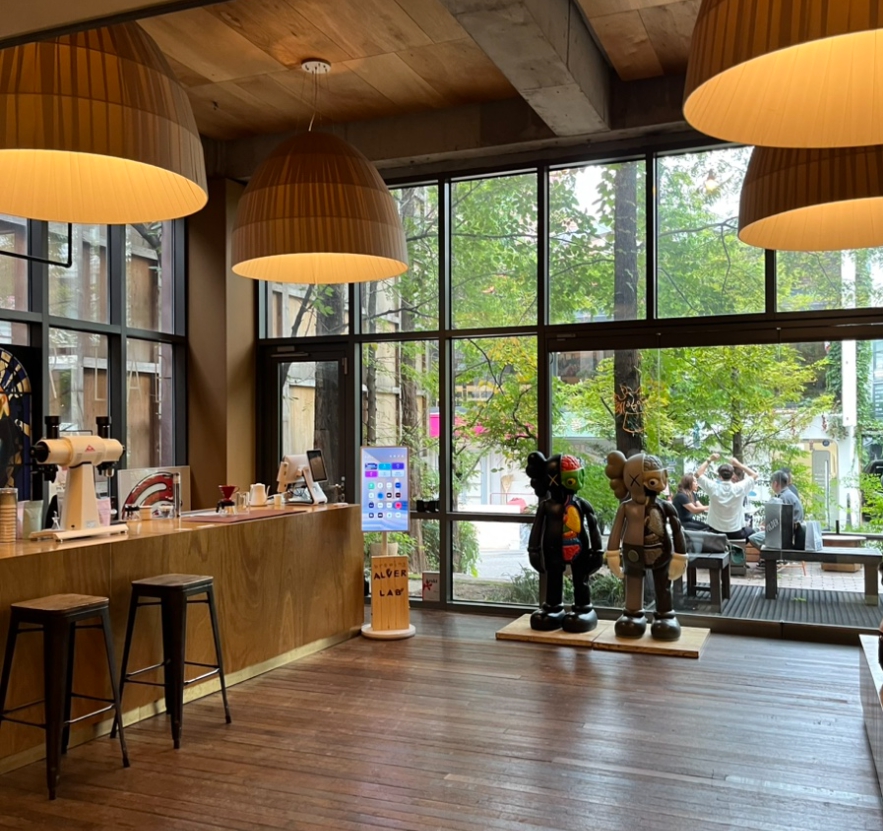
If you’re a first-time visitor, your initial reaction to Korean cafes might be that they’re style over substance — designed for Instagram, with signature drinks that look better than they taste. After a few visits, this impression usually shifts. Korean cafes are actually spaces, not just drink shops. People work in them, study, have long conversations, read books, take photos, drink slowly. The seating is genuinely comfortable, the design intentional, and the rest break they provide between activities is a real part of what makes Seoul walkable.
Gangnam has a high concentration of design-forward cafes. Pick two or three with different aesthetics — a minimalist concrete space, a wood-and-plant warm cafe, a brutalist concept shop — and spend 30–45 minutes at each, with walking time between them. This is its own kind of city tour.
Lunch: Light Korean
Save your appetite for dinner. A light lunch — bibimbap (mixed rice with vegetables and gochujang) or kalguksu (hand-cut noodle soup) — gives you energy without slowing you down. Most neighborhoods have local spots offering these for ₩10,000–15,000 ($7–11 USD).
Evening: Your First Korean BBQ
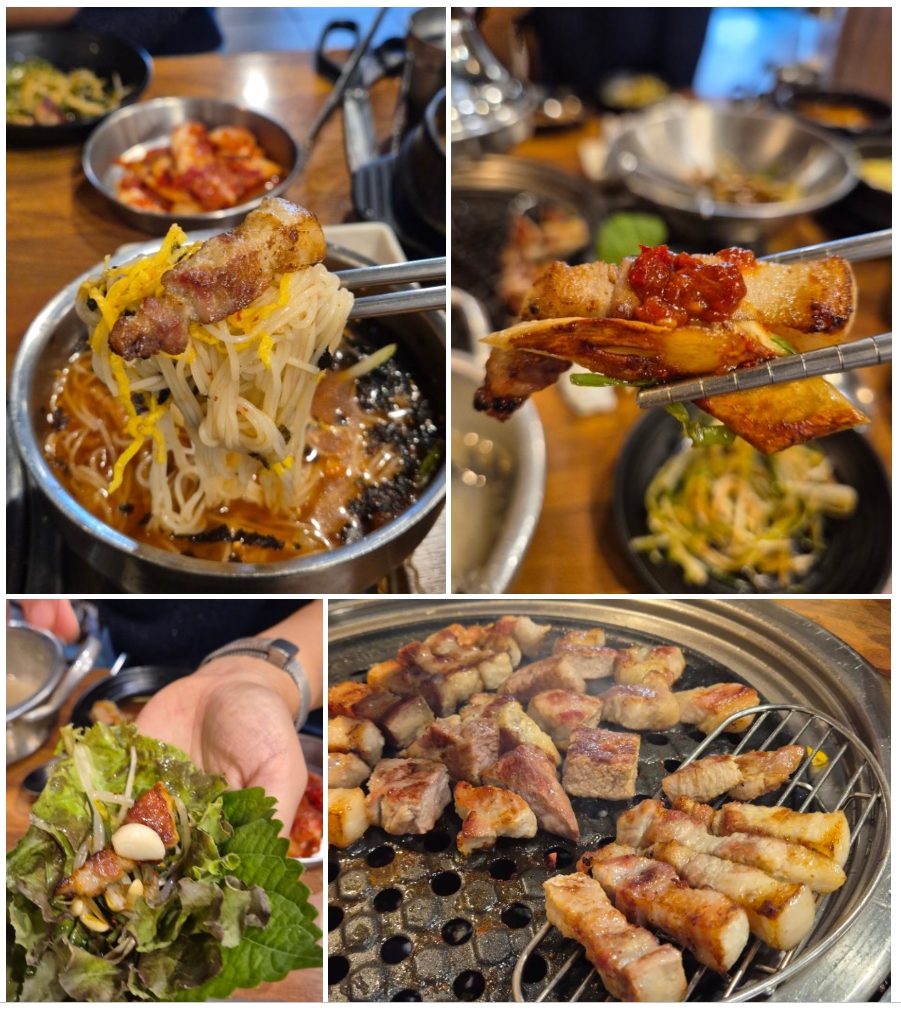
Korean BBQ (gogi-gui) is exactly what the global popularity suggests — but the details matter. A few notes for first-timers:
Start with samgyeopsal (pork belly) for your first visit. It’s the most popular Korean BBQ cut, more forgiving than premium beef, and the price point is reasonable (₩15,000–25,000 / $11–19 USD per portion). Save the high-end beef (hanwoo) for later in the trip when you’ve gotten used to the format.
Let the staff grill for you at higher-end places — they’ll bring the meat raw, cook it perfectly at your table, and tell you when each piece is ready. This is the standard service at premium spots and it dramatically improves the experience.
The full process: Take a piece of grilled pork, place it on a lettuce leaf, add a small amount of ssamjang (Korean fermented soy bean paste), maybe a sliver of garlic, then wrap and eat in one bite. The combination of crispy meat + fresh greens + salty-spicy sauce + raw garlic is genuinely transformative if you’ve never had Korean BBQ done properly.
Don’t skip the side dishes (banchan). Korean BBQ comes with 5–8 side dishes that refill for free. Try all of them. Many are as memorable as the meat itself.
Day 3: Gwangjang Market + Ikseon-dong Hanok
Day three explores Seoul’s traditional food culture and historic architecture. The morning at Korea’s oldest traditional market, the afternoon in a preserved hanok village with modern cafes inside the traditional buildings.
Morning: Gwangjang Market (광장시장)

One of Korea’s oldest traditional markets, Gwangjang has been a destination for international travelers since Netflix featured it in Street Food: Asia. The market is a working food court — narrow alleyways of food stalls where you sit on plastic stools and eat steps from where it’s cooked. Subway: Jongno 5-ga Station (Line 1), Exit 8.
What to try at Gwangjang:
— Kalguksu (hand-cut noodle soup): The market is famous for this. Chewy noodles, savory broth, optional dumplings.
— Bindae-tteok (mung bean pancakes): Crispy outside, soft inside, with mung beans and scallions. Served with soy-onion dipping sauce. The market is famous for these — you’ll see them grinding the mung beans fresh at multiple stalls.
— Kkwabaegi (twisted cinnamon-sugar donuts): Sweet, fluffy, dusted with cinnamon sugar. Many visitors say these are their favorite single thing they ate in Seoul.
— Mayak gimbap (“addictive” mini gimbap rolls): Small bite-sized rice rolls with a sweet mustard-soy dipping sauce. Easy to share, hard to stop.
— Yukhoe (beef tartare): Raw seasoned beef. The market has famous yukhoe stalls if you’re adventurous.
Practical tips: Most stalls are cash or T-money. Some now accept foreign cards. Bring small bills. Mornings (10:00 AM – noon) are calmer; lunch and dinner times get genuinely crowded.
Afternoon: Ikseon-dong Hanok Alley
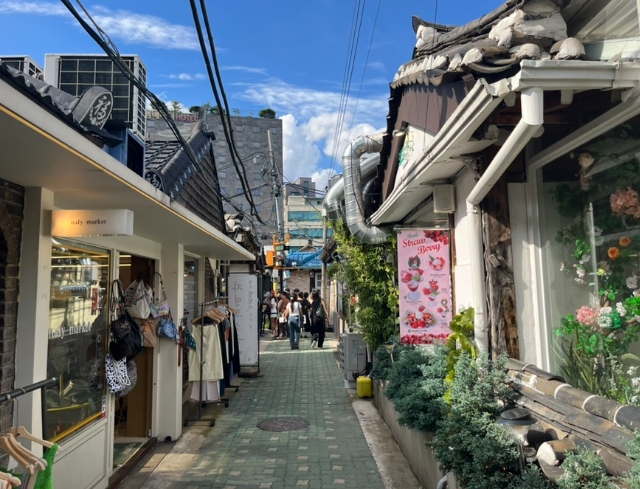
Ikseon-dong is a small district of restored hanok (traditional Korean houses), with most of them now functioning as cafes, restaurants, and small boutiques. The combination is genuinely lovely — old wooden architecture, narrow winding alleys, and unexpectedly trendy interior design inside the traditional shells. Subway: Jongno 3-ga Station (Lines 1, 3, 5), Exit 4.
What to do in Ikseon-dong:
— Walk the alleys slowly. The area is small (you can cover it in an hour) but rewards slow exploration.
— Visit one or two hanok cafes. The most famous combine Korean traditional architecture with European cafe design — think bakery counter inside a wooden traditional building. Hot chocolate, pandoro (Italian holiday cake), and garlic cream cheese bread are common signature items.
— Stop at a few small shops — handmade jewelry, Korean ceramics, vintage clothing. Prices are higher than typical Seoul shopping but the curation is genuine.
Ikseon-dong is calm during weekdays and packed on weekends. If your trip has flexibility, visit Tuesday through Thursday for the best experience.
Day 4: Seongsu-dong + Premium Beef Dinner
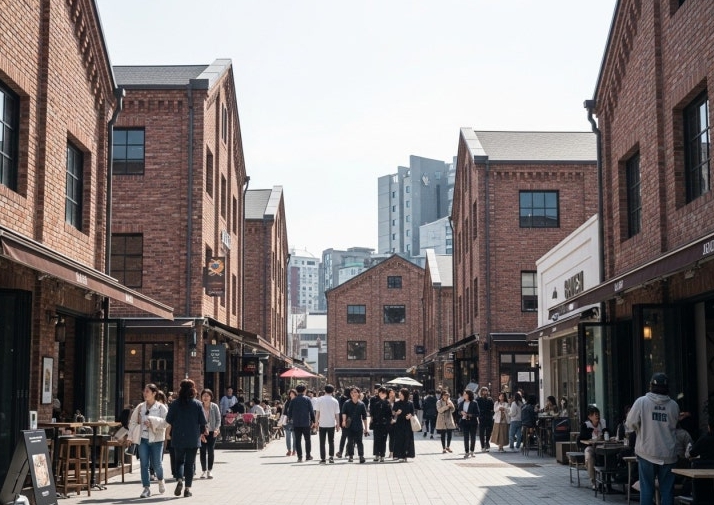
Day four shifts to Seongsu-dong — Seoul’s most-photographed creative neighborhood and probably its trendiest area. Industrial warehouses converted to design studios, pop-up stores from international brands, the highest concentration of design-forward cafes in the city, and excellent bakeries.
What Makes Seongsu Different
Often called “Seoul’s Brooklyn,” which is partially accurate. The neighborhood has the industrial-loft-converted-to-creative-space aesthetic, the high concentration of independent designers and small brands, and the visible foreigner population. The cafes here lean more European (third-wave coffee, focus on technique) and the bakeries lean toward European-style artisan bread rather than Korean traditional pastries.
Specific Things Worth Doing
Salt bread (sogeumppang) hunt. Seongsu has multiple bakeries famous for their version of sogeumppang — a small bread roll with butter sealed inside that crystallizes during baking. Crispy salt-flake exterior, buttery soft interior. Some have queues that go around the block; smaller bakeries are equally good with shorter waits.
Pop-up stores. The area cycles through pop-up brand spaces every 1–4 weeks. Some are international fashion houses, some are Korean indie brands, some are unusual concept stores. Whatever’s running during your visit will be different from what’s running a month later.
Coffee crawl. If you’re at all into coffee, Seongsu rewards a focused 2–3 cafe day. The concentration of serious coffee operations here is among the best in Asia.
Dinner: Premium Beef
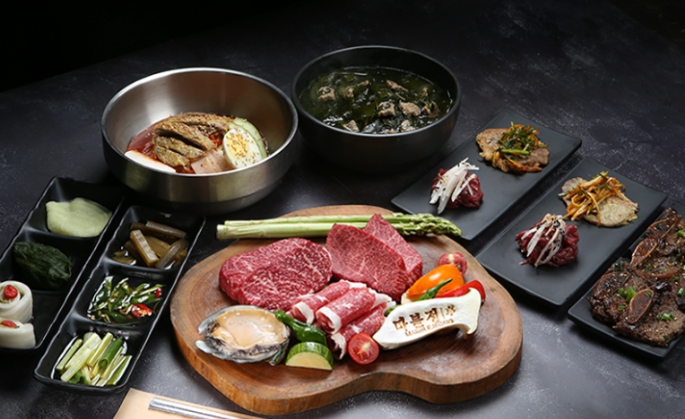
Day four is when you upgrade from pork to hanwoo (premium Korean beef). Hanwoo is Korea’s native breed of cattle, known for exceptional marbling and a less-fatty, more umami-forward flavor profile than wagyu. It’s expensive (₩60,000–120,000 / $45–90 USD per person for a proper hanwoo dinner) but worth doing once during your trip.
Hanwoo BBQ etiquette: Lower-fat than wagyu, so it doesn’t need much dressing. A pinch of chamgireum (sesame oil) salt is the classic accompaniment — let the beef be the star. Many premium hanwoo restaurants are connected to butcher shops where you can see the cuts before ordering.
Skip if budget-constrained: Hanwoo is expensive. If the budget is tight, regular pork BBQ from day two is genuinely excellent and 1/3 the price. You don’t lose much by skipping hanwoo on a tight budget.
Day 5: Hannam-dong + Comfort Food
Hannam-dong sits between Itaewon and Yongsan, often called “Seoul’s Beverly Hills” — though more accurately it’s “Seoul’s chic quiet quarter.” Less trendy than Seongsu, less touristy than Itaewon, focused on independent boutiques, lifestyle stores, and small design-forward restaurants. The aesthetic is closer to a calm European neighborhood than a Korean shopping district.
What to Do in Hannam-dong
Quiet boutique browsing. Korean independent fashion designers, ceramics studios, niche perfumeries, small art galleries. Most don’t push hard sales — you can browse for an hour without anyone bothering you.
Specialty coffee. Hannam-dong has some of Seoul’s most serious coffee shops — places that focus on bean sourcing and brewing technique rather than aesthetic. If you’ve tried cafes in Gangnam and Seongsu and want to go deeper on actual coffee quality, this is the area.
Lifestyle and home goods. Korean home design has a distinct minimalist-natural-materials aesthetic. Hannam-dong has the best lifestyle and home goods stores for taking pieces of this back with you.
Comfort Food Day
By day five, you’ve eaten a lot of meat. Day five is when I’d build in a comfort food day:
Lunch: Kimchi jjigae (aged kimchi stew) — comfort food at its purest. Aged kimchi, pork or tuna, tofu, scallions in a deep red broth. Eaten with steamed rice. ₩10,000–15,000 ($7–11 USD).
Dinner: Whole chicken hot pot (dak-han-mari) or Korean herbal roast chicken — a whole chicken slow-cooked with garlic, dates, ginseng, and rice in a clear broth. The chicken falls off the bone, the broth is deeply flavorful, and you finish by making porridge (juk) with the remaining broth and rice. Around ₩45,000–60,000 ($33–45 USD) for a chicken that feeds 2–3 people.
Day 6: Mangwon Market + Flexible Afternoon
Mangwon Market is the locals’ market — smaller and far less touristed than Gwangjang. The vendors are friendly, prices are reasonable, and the food is more daily-life Korean rather than headline tourist dishes. Subway: Mangwon Station (Line 6), Exit 2 — 5-minute walk.
What to Eat at Mangwon
— Dakgomtang (herbal chicken soup with traditional Korean medicinal ingredients) — clear, deep, restorative.
— Egg toast (Korean street toast with omelette and vegetables) — a beloved Korean street breakfast.
— Hotteok (sweet filled pancakes) — usually filled with brown sugar, honey, and walnuts; sometimes savory versions with cheese and vegetables.
— Korean-style meatballs (often with honey-mustard sauce) — fresh-made, juicy.
— Bungeoppang (fish-shaped pastries filled with red bean paste, custard, or chocolate) — a Korean street food classic, especially in winter.
Free Afternoon
Day six’s afternoon is intentionally unscheduled. By now you’ll have a sense of which neighborhoods you want to revisit, which cafes you want a second visit to, and what shopping you didn’t finish. Options:
— Olive Young run — Korea’s largest K-beauty chain. Tax refund minimum is just ₩15,000 in 2026, instant in-store refund with your passport. Take advantage now if you haven’t yet.
— Han River park — Walk, picnic, or rent a bike. Easy half-day activity.
— Day trip add-on — Suwon, Nami Island, or one of the islands near Seoul if you have the energy for one more place outside Seoul.
— Han River cruise or N Seoul Tower — Touristy but iconic; many visitors do one of these on their last full day.
📖 Related guides: Olive Young Shopping Guide · 10 Best Day Trips from Seoul
Day 7: Final Day + Departure
Day seven is about closing the loop. Save it for revisiting your favorite spot from earlier in the week, the meal you most want to repeat, and getting back to the airport without stress.
Morning: A Repeat Visit
By now you’ve found at least one cafe, restaurant, or neighborhood you’d happily go back to. Day seven is the right time to revisit. The familiarity of a second visit is a small, undervalued part of a good trip — knowing where to sit, what to order, that you don’t have to figure anything out from scratch.
Lunch: A Last Definitive Korean Meal
My recommendation: ganjang gejang (soy-marinated raw crab) or gopchang (grilled beef intestines) — both polarizing for first-timers but unforgettable when done well. Ganjang gejang especially is the kind of Korean dish you’ll probably never find authentically prepared at home and will spend years thinking about. Around ₩40,000–80,000 ($30–60 USD) per person depending on portion.
If you’re not adventurous: a final round of Korean BBQ at the place you most enjoyed.
Getting to Incheon
Allow 3 hours before international flight departure — 1 hour to get to the airport, plus check-in, security, immigration. AREX or Airport Limousine bus, depending on luggage and proximity to your hotel.
Practical Tips for First-Time Visitors
Korean cafe culture is a real feature. Cafes here are designed as spaces for spending time, not just for getting coffee. Use them as rest stops between activities — sit for 30–45 minutes, recharge, then continue. This rhythm makes a Seoul trip dramatically less exhausting than it would otherwise be.
Try one new food per day. Korean cuisine has incredible breadth. Resist the urge to stick to dishes you already know. Each day, order at least one thing you haven’t had before.
Banchan (side dishes) are free. Korean restaurants serve 4–8 small side dishes alongside the main meal. They refill automatically. Try all of them.
Reservations matter at premium restaurants. Famous hanwoo BBQ spots, popular ganjang gejang restaurants, and Michelin-starred places all need reservations days in advance — often through Korean apps like Catch Table. Either book before your trip or ask your hotel concierge to call.
Weekday lunch is dramatically better than weekend dinner. For famous restaurants, Tuesday-Thursday lunches typically have shorter waits, fresher staff, and identical food at the same prices.
Cash for traditional markets. Gwangjang and Mangwon vendors often prefer cash. ₩30,000–50,000 in small bills handles a full day at either market.
Tipping is not expected. Korea doesn’t have a tipping culture. Pay the menu price, that’s it. This applies to restaurants, cafes, taxis, and hotels.
Comfortable shoes are essential. Seoul is walkable but distances add up. You’ll typically walk 15,000–25,000 steps daily following an itinerary like this one. Save the fashion shoes for cafe sitting.
Family Travel Notes
Seoul is an unusually good destination for multigenerational family trips. A few specific reasons:
Comfortable cafes for older parents. Korean cafes have generously padded seating, quiet music, and the cultural acceptance of taking your time. Parents who tire faster get genuine rest stops built into every neighborhood.
Walking-friendly cities. Most Seoul districts are flat or gently sloping. The exception is Ikseon-dong’s narrow alleys and the steeper streets in Hannam-dong; everything else is easy walking.
Food variety for picky eaters. Korean cuisine has clear options for every preference — mild (seolleongtang, kalguksu), spicy (kimchi jjigae, tteokbokki), grilled meat (Korean BBQ), seafood (raw and cooked), comfort food (porridge, soups), and lots of vegetable dishes (banchan).
Safe streets at all hours. Late-night walking in Seoul is genuinely safe. Older parents won’t feel uncomfortable returning to a hotel at 10 PM.
English support is decent in tourist areas. Hotels, major restaurants, large department stores, and famous attractions have English-speaking staff. Off the beaten path, less so — Papago app handles that gap.
Best Times to Visit
Spring (April–May): Best overall for this itinerary. Cherry blossoms early April, mild temperatures, comfortable walking, lighter rain than later seasons.
Autumn (September–October): Equally good. Clear blue skies, fall foliage starting in late October, cooler walking conditions, comfortable cafe weather.
Summer (June–August): Hot and humid. Korean BBQ feels heavy in the heat. Indoor activities (cafes, markets, shopping) are pleasant; outdoor walking is exhausting. Tropical thunderstorms in late summer.
Winter (December–February): Cold and dry, with occasional snow. Hot Korean soups (seolleongtang, samgyetang) shine in winter. Limited outdoor scenery but beautiful for hanok villages and cozy cafe afternoons. Bundle up.
Frequently Asked Questions
Is 7 days enough for Korea, or should I extend?
For Seoul alone, 7 days is comfortable. For Korea as a whole, you’ll feel rushed — you’d want to skip Busan, Jeju, and the regional destinations entirely. If you can extend to 10 days, add Busan (3 days). For 14 days, add Jeju (4 days) for a complete Korea trip. Seven days is the right answer if Seoul is your primary destination and you want to do it properly.
Should I do a day trip during this 7-day itinerary?
My honest take: not necessary, but possible. Seoul has enough to fill 7 days. If you really want a day trip, day 6’s flexible afternoon can become a half-day to Suwon (UNESCO fortress + Starfield Library), which is the closest worthwhile option.
Is this itinerary suitable for older parents or grandparents?
Yes, with minor adjustments. Cut the pace by 30% — instead of three neighborhoods per day, do two. Skip the Ikseon-dong narrow alleys if mobility is limited. Add longer cafe rest periods. The food, market, and cafe components work beautifully for older family members.
How much should I budget for food across 7 days?
Roughly $80–120 per person per day for food, depending on how often you do premium meals. Breakdown: ₩10,000–15,000 ($7–11) breakfast/lunch, ₩30,000–80,000 ($22–60) dinner depending on whether it’s a regular Korean meal or premium hanwoo. Add ₩5,000–10,000 ($4–7) for cafe and snack stops. Total around $700–900 per person for a week of generous eating.
What if my family doesn’t like spicy food?
Plenty of Korean cuisine is mild — Korean BBQ (without spicy sauces), seolleongtang, samgyetang, kalguksu, bibimbap (just go easy on the gochujang), most market snacks except tteokbokki. You can do this entire itinerary without ever eating something genuinely spicy. The dishes I’d skip if spice is an issue: kimchi jjigae, tteokbokki, spicy braised dishes.
Where should I stay for this itinerary?
Central Seoul districts work best — Myeong-dong, Gangnam, Itaewon/Hannam-dong, or Jongno areas. Each has subway access to all neighborhoods in this itinerary. Myeong-dong is the most touristy and convenient for first-timers; Hannam-dong is the chicest. Avoid neighborhoods that require multiple subway transfers to reach the main neighborhoods — you’ll lose time daily.
How crowded will the markets and cafes be?
Weekend Gwangjang Market is genuinely packed — you’ll wait 20+ minutes for popular stalls. Tuesday-Thursday is much calmer. Famous cafes in Seongsu and Hannam-dong have 30–60 minute waits on Saturday afternoons; weekday mornings have no wait at all. Plan around weekends if possible.
Should I learn any Korean phrases?
Five worth learning: annyeonghaseyo (hello), gamsahamnida (thank you), eolma-yeyo (how much), maewoyo (it’s spicy — useful for warnings), and jeo-i + pointing (this one, please). Beyond that, Papago handles everything.
Considering staying longer than a tourist visit? Our D-10 job seeker visa guide covers the path for those who want to look for work in Korea.
Final Thoughts
Seven days in Seoul, done with this kind of mix — half famous sights, half neighborhood exploration, balanced food, generous cafe time — leaves first-time visitors with a much fuller sense of the city than a rushed “see all the top 10 attractions” pace ever does. Most people who follow something close to this itinerary come away saying they liked Seoul more than they expected, found Korean food more varied than they’d assumed, and ended up wanting to come back.
If I had to compress this itinerary further (say, you only have 4 days), the core priorities I’d keep are: one Korean BBQ dinner, one Gwangjang Market lunch, one cafe-heavy afternoon in either Ikseon-dong or Seongsu, and one comfort-food meal (seolleongtang or kimchi jjigae). Those four anchor the Seoul food and cafe experience; everything else builds on top.
This itinerary reflects a moderate-paced family-friendly approach to Seoul. Budget estimates verified for April 2026; specific restaurant prices vary by neighborhood and current menus. Korean policies on K-ETA, tax refunds, and visa requirements change periodically — confirm current rules before booking your trip.