Seoul is one of the world’s great cities, but one of its underrated advantages is how easy it is to leave for a day. Korean rail and bus networks are extensive and reliable, which means that from central Seoul you can reach UNESCO-listed fortresses, theme parks, mountain hiking trails, underground art galleries, traditional villages, and small islands — all within a 1-to-3-hour window, then return for dinner.
This guide covers 10 day trip destinations from Seoul that international visitors actually find worth the journey. Some are famous (Everland, Nami Island); others are quieter places Koreans love that most foreign travelers miss entirely (Anyang Art Park, Gwangmyeong Cave). I’ve included travel time and method for each, what makes the place worth visiting, and — honestly — who shouldn’t bother. Not every Korean attraction is worth your limited Korea time, and I’d rather tell you that upfront.
QUICK OVERVIEW
Easiest (under 1 hour): Suwon, Namhansanseong, Gwangmyeong Cave, Wolmido
Moderate (1–2 hours): Everland, Nami Island, Anyang Art Park, Paju
Longer (2+ hours): Three Sisters Islands, Seoraksan
Best for first-time visitors: Suwon, Everland, Nami Island
Best for repeat visitors: Anyang Art Park, Three Sisters Islands, Gwangmyeong Cave
1. Suwon (수원) — UNESCO Fortress + Viral Library
Suwon is the closest “real” day trip from Seoul — just 30 minutes by KTX or about 60 minutes by Subway Line 1. The city is best known for Hwaseong Fortress, a UNESCO World Heritage Site, and more recently for the Starfield Library Suwon, a viral spot on Korean social media that opened in January 2024.

Hwaseong Fortress
Built in the late 1700s and completed in 1796, Hwaseong is a 5.7 km city wall surrounding the old downtown of Suwon. It’s one of Korea’s most architecturally sophisticated fortresses — the construction techniques were ahead of their time, combining Korean, Chinese, and Western military engineering. The wall is walkable along most of its length, with watchtowers, gates, and pavilions along the route.
Practical info: The wall exterior is free to access 24/7. Hwaseong Haenggung (the temporary palace inside the fortress) charges ₩1,500 ($1.10 USD) admission. Allow 2–3 hours for a partial walk; 4–5 hours for the full loop.
Starfield Library Suwon
Inside the Starfield Suwon mall, this is a massive 4-story open library with 22-meter-tall bookshelves stretching to the ceiling. It’s free to enter, free to read (no checkout system, books are for in-place reading only), and it has become one of Korea’s most-photographed indoor locations. Bigger than the original Starfield Library at Seoul COEX (which has 13m shelves).
How to get there: Subway Line 1 to Hwaseo Station, Exit 1 — the mall is right next to the station. About 60 minutes from Seoul Station.
Suggested Half-Day Itinerary
Arrive in Suwon around noon. Eat Suwon galbi (the city’s famous marinated beef short ribs) for lunch. Walk the fortress walls in the afternoon. End at Starfield Library for browsing and a coffee. Return to Seoul by evening.
Best for: First-time visitors to Korea, anyone who enjoys walkable historic cities, photographers (both the fortress and library are highly photogenic).
2. Everland (에버랜드) — Korea’s Largest Theme Park
Korea’s biggest theme park, located in Yongin (about 1 hour by direct bus from Gangnam). Everland is celebrating its 50th anniversary in 2026, which means special parades, expanded fireworks, and limited edition merchandise throughout the year. Major attractions include T-Express (one of the steepest wooden roller coasters in the world), a safari zone with lions and bears, and dramatic seasonal events — the spring Rose Festival is the most famous, drawing visitors from all over Korea.

For international visitors, Everland is worth the trip especially if your visit overlaps with the Rose Festival (mid-May to mid-June) or the Ever-to-Caby promotion that includes free Caribbean Bay water park access through May 28, 2026.
How to get there: Bus 5002 from Gangnam Station Exit 10, about 50–70 minutes. Klook shuttle buses from major Seoul tourist areas are also available.
📖 Full guides: Everland Rose Festival 2026 Complete Guide · Ever-to-Caby Free Water Park Promotion
Best for: Families with kids, theme park enthusiasts, anyone visiting May 14 – June 15 (Rose Festival window).
3. Nami Island (남이섬) — The Iconic Tree-Lined Island
A small crescent-shaped island in the Han River, famous for its tree-lined walking paths that have appeared in countless Korean dramas — most notably Winter Sonata, which made Nami a destination for K-drama fans across Asia. The signature shot is the long, straight path lined with metasequoia trees that creates a perfectly symmetrical tunnel of greenery (or, in autumn, gold and red).

Cars aren’t allowed on the island — you arrive by a short ferry from Gapyeong, then walk, cycle, or take electric carts around. The pace is genuinely slow, which is the point.
How to get there: ITX-Cheongchun train from Yongsan to Gapyeong Station (1 hour), then 10-minute bus or taxi to Nami Ferry Wharf, then 5-minute ferry. Total about 1.5 hours from Seoul.
Best for: Couples, K-drama fans, photographers (autumn is the most-photographed season), families looking for a slow-paced day.
For Nami Island specifically, see our detailed Nami Island day trip guide from Seoul — with current ferry schedules, ITX-Cheongchun details, and the best season to visit.
4. Wolmido (월미도) — Retro Seaside Amusement
A small island connected to Incheon by a bridge, Wolmido is one of the easiest “seaside” experiences from Seoul. The main draw is a 1 km coastal promenade called Wolmido Culture Street (월미도 문화의 거리) — lined with seafood restaurants, cafes with ocean views, street performers, and a small retro amusement park with a Viking ship ride and Ferris wheel sitting directly on the water.
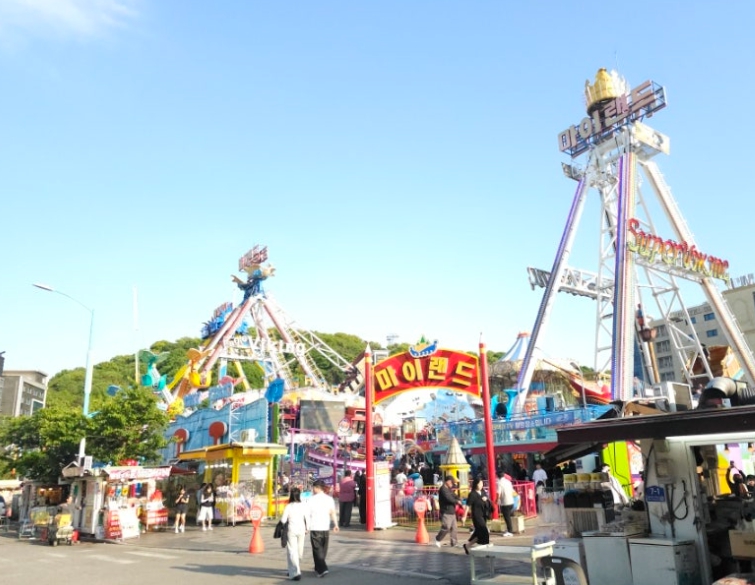
It’s not glamorous and it’s not “authentic countryside Korea” — it’s loud, busy, slightly tacky in the best way, and has the energy of a Korean beachside vacation town. The Viking ride right next to the sea is genuinely memorable. Mid-day to evening, especially around sunset, is the right time to be there.
Local Food to Try
Wolmido is famous for fresh seafood — raw fish (hoe), grilled clams, and spicy steamed octopus. There’s also a popular dessert street selling soft-serve ice cream in cone-shaped towers, sometimes 30 cm tall, and various Korean street snacks.
How to get there: Subway Line 1 to Incheon Station, then 5-minute taxi or the free Wolmido shuttle bus. About 1 hour from Seoul Station total.
Best for: Travelers wanting a casual half-day, seafood lovers, anyone curious about Korean beachside culture.
5. Seoraksan (설악산) — Korea’s Most Famous Mountains
Korea’s third-highest mountain and probably its most iconic. Seoraksan National Park, on the east coast near Sokcho, is a dramatic landscape of granite peaks, deep valleys, ancient Buddhist temples, and — in autumn — possibly the most spectacular fall foliage in the country.
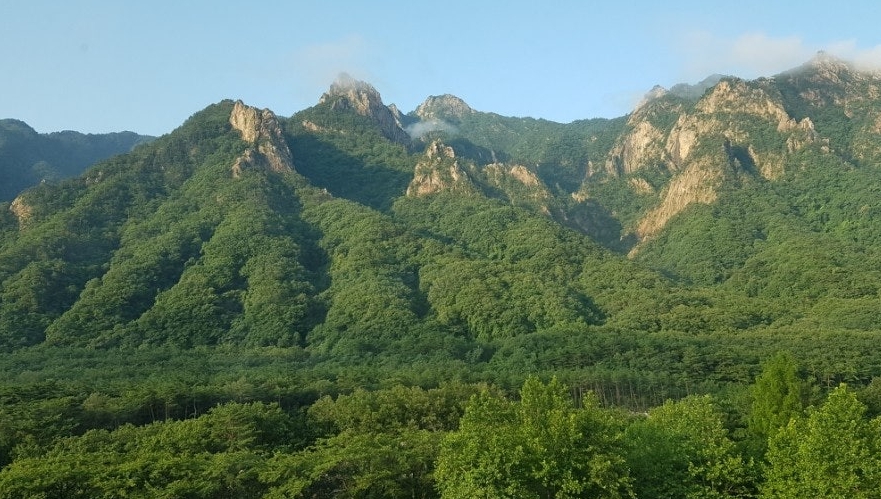
This is the longest commitment on the list — about 2.5 to 3 hours by express bus from Dong-Seoul Bus Terminal to Sokcho. But many international visitors say it’s the most memorable day of their Korea trip.
What to Do at the Park
Easier option: Take the cable car to Gwongeumseong Fortress site (₩15,000 / $11 USD round trip), enjoy the panoramic views, walk to the small fortress remnants. Total 1–2 hours of activity. Suitable for almost anyone.
Moderate option: Hike to Biseondae Pavilion (2 hours round trip), a riverside spot with smooth rock formations and excellent photos.
Serious option: Climb to Daecheongbong (Korea’s third-highest peak, 1,708m). 8–10 hours, technical sections, only for experienced hikers.
Sinheungsa Temple: Near the park entrance, home to a massive bronze Buddha statue against the mountain backdrop. Free to enter, beautiful photo location.
How to get there: Express bus from Dong-Seoul Bus Terminal to Sokcho (2.5 hours, ₩18,000 / $13 USD), then local bus 7 or 7-1 to the park entrance.
Best season: Mid-October to early November for the famous fall foliage. Spring and summer are pleasant. Winter has dramatic snow but reduced cable car operations.
Best for: Travelers with at least 7 days in Korea, hiking enthusiasts, autumn foliage chasers. Skip if you have fewer than 5 days total.
6. Three Sisters Islands (신도/시도/모도) — Slow Island Life
Three small islands connected by bridges, just off the coast of Yeongjong (where Incheon Airport is). Reached by a 10-minute ferry from Sammok Pier, the Three Sisters offer a genuinely quiet small-island experience — fishing villages, small beaches, traditional rural life, and a strange outdoor sculpture park called Modo Modeling Beach.
Less dramatic than other islands on the Incheon coast but more accessible. Perfect for travelers who want “island day” without committing to multi-hour ferries.
📖 Full guide: Islands Near Seoul: 5 Day Trip Guide (covers Three Sisters plus Ganghwa, Yeongjong, Muui, and Seungbongdo).
Best for: Slow travelers, photographers, anyone with a long layover at Incheon Airport.
7. Namhansanseong (남한산성) — Mountain Fortress UNESCO Site
A UNESCO World Heritage mountain fortress just southeast of Seoul, in Gwangju (not to be confused with the larger Gwangju city in southwestern Korea). The fortress walls — built in the early 1600s as an emergency refuge for the Joseon royal court — wind through the mountains for over 12 km, with hiking trails along the entire perimeter.
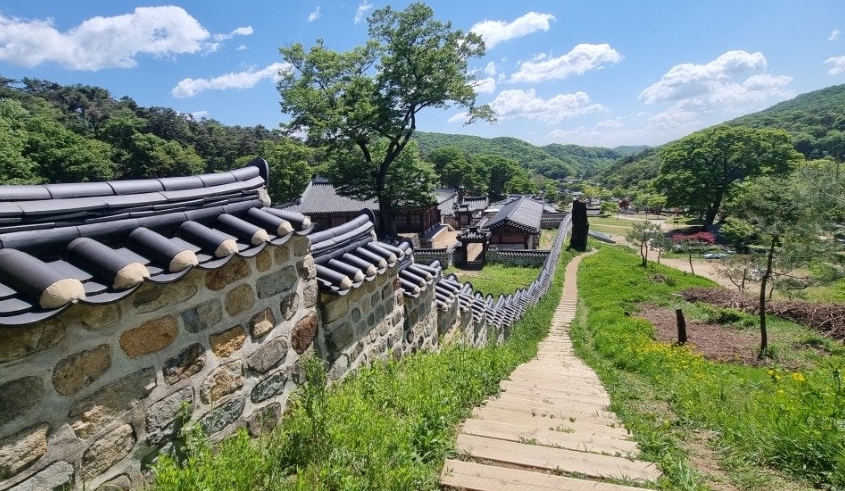
Inside the walls is a small traditional village with restaurants serving Korean comfort food — pajeon (green onion pancakes), dubu jjigae (tofu stew), and makgeolli (Korean rice wine). The combination of forest hiking, fortress walls, and a hot meal afterward is one of the more genuinely Korean weekend activities you can experience.
What to do: Most visitors do the 1–2 hour walk along part of the wall, visit the small Haenggung temporary palace inside the fortress, and stop for lunch in the village. The full perimeter loop is 12 km and takes 4–5 hours.
Views: On clear days, the higher sections of the wall offer panoramic views of Seoul’s skyline in the distance.
How to get there: Subway Line 8 to Sanseong Station, Exit 2, then Bus 9 or 52 to the fortress entrance. About 1 hour from central Seoul total.
Best for: History buffs, light hikers, anyone who wants a UNESCO site without traveling far from Seoul.
8. Gwangmyeong Cave (광명동굴) — Underground Art and Wine
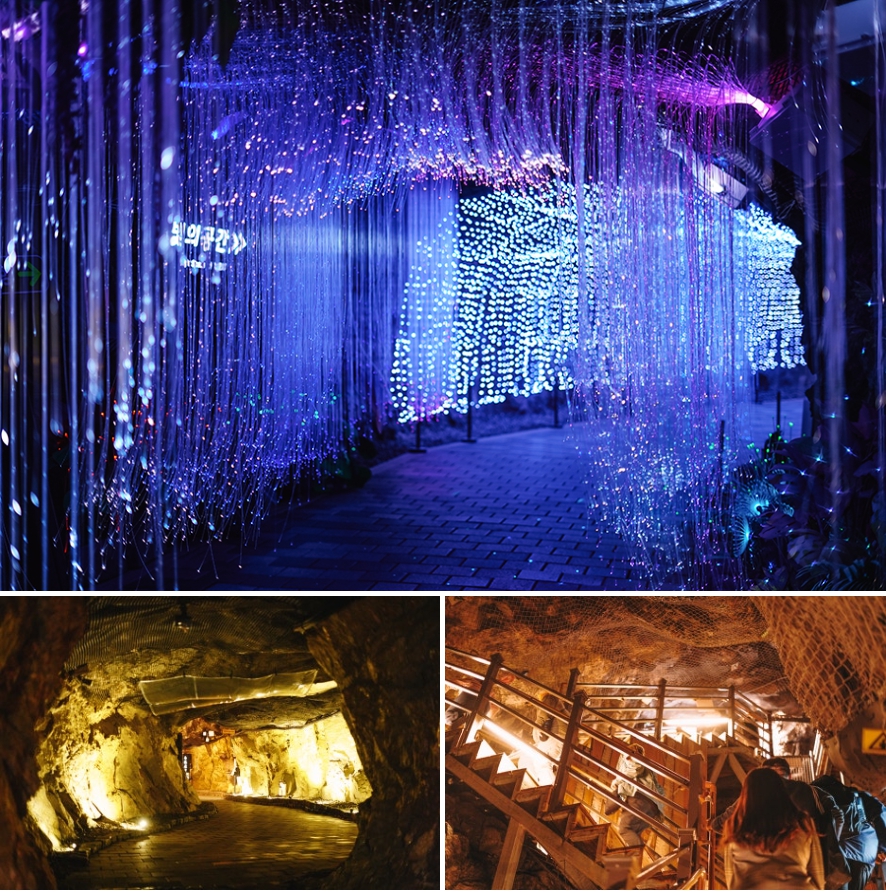
One of Korea’s more unusual day trips — a former gold mine, abandoned in 1972, now reopened as an underground tourist attraction with light installations, art exhibitions, a wine cellar, and small underground performance venues. The temperature inside is a steady 12°C (54°F) year-round, which makes it especially appealing on hot summer days.
Inside the Cave
Wine Cave: A long, dramatically lit corridor lined with Korean wine bottles, doubling as an actual wine cellar. Wine tastings available. The acoustics in the cave make it strangely peaceful.
Light installations: Throughout the tunnels, contemporary light art works and digital installations create an immersive walking experience. Some sections feel like a mix between a museum and a theme park.
Underground performance space: Small venue hosting occasional concerts, plays, and exhibitions.
Practical info: Admission ₩6,000 ($4.50 USD). Bring a jacket — the cave is cold even in summer. Wear comfortable walking shoes. Allow 2–3 hours.
How to get there: Subway Line 7 to Cheolsan Station, then Bus 17 to Gwangmyeong Cave. About 1 hour from central Seoul.
Best for: Travelers visiting in summer who want to escape the heat, art and design enthusiasts, families with older kids, anyone interested in repurposed industrial spaces.
9. Anyang Art Park (안양예술공원) — Outdoor Sculpture in a Valley
A relatively unknown gem for international visitors — an outdoor art park where contemporary sculpture, architectural installations, and pavilions are integrated into a wooded valley along a small stream. Many of the works are by internationally recognized artists and architects, including pieces you can walk through, sit on, or interact with directly.
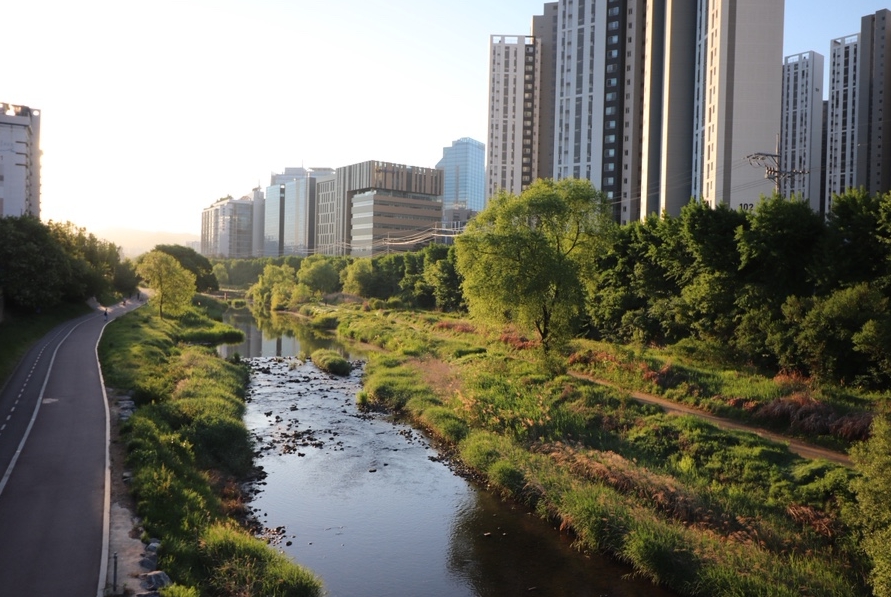
The park is built around a 2 km streamside walking path, with installations placed at intervals — some visible from the path, others tucked just off to the side. It’s the kind of place where you keep discovering new pieces as you walk.
What Makes It Different
Most outdoor sculpture parks are flat lawns dotted with sculptures. Anyang is built into a forested mountain valley with the stream running through it. The art is genuinely integrated with the landscape — pavilions over water, structures climbing the hillsides, walking paths that pass through and around the works. It feels less like a museum and more like a quiet forest with surprises.
Highlights: The “Hexagonal Pavilion” by MVRDV, the elliptical “Anyang Pavilion” by Frank Stella, and several sound sculptures along the stream.
How to get there: Subway Line 1 to Anyang Station, then 30-minute Bus 2 to Anyang Art Park, OR Subway Line 4 to Beomgye Station, then 20-minute Bus 11. About 1 hour from central Seoul total.
Best for: Art and design enthusiasts, contemporary architecture fans, quiet nature lovers. Skip if you’re not interested in contemporary art — the appeal is heavily dependent on whether the works resonate with you.
10. Paju (파주) — Book City, Art, and the DMZ
North of Seoul near the DMZ border, Paju has two completely different reasons to visit: Paju Book City (Korea’s planned community of publishers, bookstores, and design studios) and the DMZ tour (the border with North Korea, accessible only via official tour).
Paju Book City
A planned town of 250+ publishing companies, designed in the early 2000s with strict architectural guidelines. Each building was designed by a different architect, creating a coherent but visually striking modern district. The standout building is the Mimesis Art Museum by Álvaro Siza — a sculptural white modernist gallery worth visiting for the building alone, plus a small but well-curated contemporary art collection.
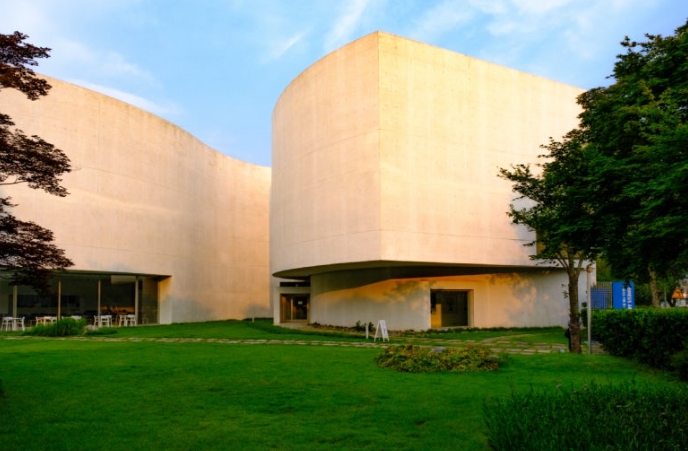
Bookstores in Book City include carefully designed independent shops with small cafes — even if you don’t read Korean, the design and atmosphere are worthwhile.
DMZ Tour
Korea’s most accessible international tourist destination — the Demilitarized Zone separating South and North Korea. Tours are mandatory (you cannot enter independently) and typically include the Third Tunnel (one of four invasion tunnels dug from the North), the Dora Observatory (telescopes into North Korean farmland), and Dorasan Station (an unused train station built for reunification).
Book through Klook, Trazy, or a major hotel tour desk. Most tours are half-day or full-day from Seoul, including transport. Bring your passport — required for DMZ entry.
How to get there: Paju Book City: Bus 2200 from Hapjeong Station Exit 1, about 1 hour. DMZ: Tour buses pick up from major Seoul hotels.
Best for: Book City — designers, architecture fans, quiet day-trippers. DMZ — anyone with interest in Korean War history or current political situation.
Which Day Trip Should You Choose?
DECISION GUIDE
“I have one extra day after Seoul and want history” → Suwon (UNESCO fortress + easy access)
“I want a fun day with kids or theme park energy” → Everland
“I want Instagram-worthy nature photos” → Nami Island (autumn especially)
“I want a casual seaside afternoon” → Wolmido
“I want the most dramatic Korean landscape” → Seoraksan (only if 7+ days)
“I want quiet small-island life” → Three Sisters Islands
“I want a historic site + light hike + Korean food” → Namhansanseong
“I want something unusual on a hot summer day” → Gwangmyeong Cave (cool underground)
“I want contemporary art and architecture” → Anyang Art Park or Paju Book City
“I want to see North Korea” → DMZ tour from Paju
Practical Tips for All Day Trips
Get a T-money card on arrival. Available at any convenience store in Korea. Works on all subways, buses, and most taxis. ₩4,000 for the card plus whatever you load. This is the single most useful purchase for a Korea trip.
Use Naver Map or KakaoMap, not Google Maps. Google Maps is unreliable for Korean public transport. Naver and Kakao show accurate bus routes, real-time arrival times, and walking directions.
Leave Seoul early. Most worthwhile day trips need at least 4–5 hours on site. Aim to leave Seoul by 9:00 AM to maximize daylight, especially for places that close at sunset like fortresses and mountains.
Weekday is dramatically better than weekend. All popular Korean destinations are crowded on Saturdays and Sundays. If you have flexibility, Tuesday through Thursday gives you a much better experience.
Carry cash for smaller places. Wolmido, the islands, and traditional markets sometimes prefer cash. ₩50,000 ($37 USD) in small bills covers most situations.
Korail Pass for train-heavy itineraries. If you’re doing multiple train-based day trips (Suwon by KTX, Nami by ITX, plus a longer trip to Busan or Jeonju), the Korail Pass can save money. It does NOT cover the Korea Sea Train tourist train, but it does cover all standard intercity trains.
Frequently Asked Questions
How many day trips should I do during a Korea visit?
For a typical 7-day Korea trip, 1–2 day trips from Seoul is the sweet spot. Any more and you’ll feel like you spent the whole trip in transit. For longer trips (10+ days), 3–4 day trips is reasonable. Less is generally more — depth beats breadth for trip satisfaction.
Are organized tours worth it, or should I go independently?
Depends on the destination. DMZ tours are mandatory — you cannot visit independently. Suwon, Nami Island, and Everland are easy to do solo with apps. Seoraksan and the islands are doable solo but logistically easier with a guide. Klook and Trazy both have well-rated English-language tours for most destinations on this list.
Which day trip is most accessible for people with mobility issues?
Starfield Library Suwon (indoor, flat), Gwangmyeong Cave (some sections are walkable but check accessibility info), Paju Book City (flat, well-paved), and parts of Nami Island (the central path is flat) are the most accessible. Avoid Seoraksan, Namhansanseong walls, and the Three Sisters Islands if mobility is significantly limited.
Can I combine multiple destinations in one day?
Some pairings work. Suwon + Gwangmyeong Cave is doable (both nearby, both half-day). Anyang Art Park + Gwangmyeong Cave also works geographically. Avoid trying to combine far-apart destinations — you’ll spend most of the day in transit.
Which destination has the best food scene?
Suwon is famous for Suwon galbi (marinated beef short ribs) — arguably some of the best in Korea. Wolmido for fresh seafood. Namhansanseong for traditional Korean village food (pajeon, dubu jjigae, makgeolli). All three reward staying for a meal rather than rushing back to Seoul for dinner.
Is autumn (October–November) the best time for day trips?
For natural destinations: yes, definitely. Seoraksan, Nami Island, and Namhansanseong all peak in October fall foliage. For urban/indoor destinations (Suwon, Gwangmyeong Cave, Paju Book City), any season works. Spring (April–May) is the close second-best season, particularly for the Everland Rose Festival and cherry blossoms across Korea.
Should I rent a car for day trips?
For most destinations on this list, no — Korean public transport is excellent and renting/parking is more hassle than help. Exceptions: if you’re doing multi-stop trips around Gyeonggi Province (combining several places far from train stations), or if you want to visit smaller side destinations near Seoraksan. Otherwise, T-money + KTX + buses cover everything.
Final Thoughts
The genuine advantage of using Seoul as a base is that you’re surrounded by destinations that don’t fit into the typical “Korea highlights” tour. UNESCO fortresses an hour by KTX. Repurposed gold mines turned into art galleries. Outdoor sculpture parks designed by world-famous architects. Mountain hiking trails three hours away. Small islands almost no international tourists visit. The country fits a lot into a 200 km radius around the capital.
For trips longer than five days, picking even one or two of these day trips changes the texture of the visit. The most-recommended starting point is Suwon — closest, most accessible, with both UNESCO history and viral modern photo spots. If you can fit in only one day trip, Suwon is the safest choice. If you can fit three, mix one famous destination (Everland or Nami), one less-known one (Anyang Art Park or Gwangmyeong Cave), and one nature destination (Seoraksan in autumn, Three Sisters in summer).
Travel times, prices, and admissions verified for April 2026. Public transport schedules and ticket prices change periodically — always confirm current details on Naver Map or the destination’s official site before traveling. Seasonal events (rose festival, fall foliage, etc.) have specific date windows; check official festival calendars.