
Seoul has a secret most international visitors miss: it’s surrounded by islands. The Incheon coastline west of the city is dotted with over 100 islands of various sizes, from large connected ones you can drive to, to tiny rocky outcrops accessible only by occasional ferries. For travelers staying in Korea more than a few days and looking to escape the urban density, these islands offer remarkably different experiences — UNESCO prehistoric sites, mudflat hiking, ondol-heated traditional villages, beaches with views of Incheon Airport’s runways, and on a clear day, even glimpses of North Korea.
Not all islands near Seoul are worth the effort. Some are heavily developed, some are too far for a day trip, and some are genuinely best left to Korean campers and birdwatchers. This guide covers five islands that strike the right balance — accessible enough for a day trip or overnight from Seoul, distinct enough to be worth the journey, and friendly enough to navigate without speaking Korean. They’re ranked roughly by accessibility, from “you can take a bus there” to “you need an early-morning ferry.”
QUICK COMPARISON
Ganghwa Island: UNESCO history, easiest access (1 hr by bus, no ferry needed)
Yeongjong Island: Right at Incheon Airport (AREX), beaches and rail bike
Muui Island: 5-min ferry from Yeongjong, beaches and trails
Seungbongdo: 2-hr ferry, dramatic rock formations and 9.5 km coastal trail
Sindo/Sido/Modo (the “three sisters”): 10-min ferry, three connected small islands
1. Ganghwa Island (강화도) — Easiest, Most Historical
Korea’s fifth-largest island, connected to the mainland by bridges — meaning no ferry needed. This makes Ganghwa the easiest “real island” experience near Seoul, accessible by direct bus or car in about an hour from central Seoul.
What makes Ganghwa stand out from the other options on this list isn’t beaches or hiking — it’s history. The island holds UNESCO World Heritage prehistoric dolmens (Bronze Age stone burial structures, Korea is home to over 40% of the world’s dolmens, and many of the best preserved ones are here), a 4th-century Buddhist temple (Jeondeungsa), Joseon-era fortresses that fought off French, American, and Japanese invasions in the 1800s, and the Ganghwa Peace Observatory where you can see directly into North Korea on clear days.
Highlights
Ganghwa Dolmens Park & Museum (강화고인돌): The largest concentration of Bronze Age dolmens in the world. UNESCO-listed since 2000. The museum has bilingual English/Korean signage and is genuinely educational.
Jeondeungsa Temple (전등사): Founded in the 4th century, one of Korea’s oldest Buddhist temples. A 20–30 minute forest hike up Jeongjoksan leads to the temple, with the Jukrimdawon Tea House on the temple grounds for a quiet rest.
Ganghwa Peace Observatory (강화평화전망대): A high point with telescopes pointed across the Han River estuary directly into North Korea. The view is calmer than expected — farmland, small villages, people going about daily life. Worth the trip for the perspective alone.
Chojijin Fortress (초지진): A Joseon-era coastal fortress used to repel Japanese invasions in the 1500s and later American naval expeditions in 1871. Walking the restored walls gives a clear sense of Korea’s centuries of coastal defense.
How to Get There
Bus 3000 from Sinchon Station (Line 2, Exit 1) goes directly to Ganghwa Intercity Bus Terminal. Departures every 15–20 minutes, runs 5:40 AM to 11:20 PM, about 1 hour 30 minutes, around ₩2,800 ($2 USD) with T-money card. From the bus terminal, local taxis or buses cover the island.
Driving: About 1 hour from central Seoul via the Olympic Expressway. Free parking at most major sites.
Guided tours: Klook and Trazy offer English-language Ganghwa day tours — useful if you want a curated experience with transport handled. Typical price ₩60,000–100,000 ($45–75 USD).
Best for: History buffs, travelers without much time who still want a “real” island experience, anyone interested in Korean military and prehistoric heritage.
2. Yeongjong Island (영종도) — At the Airport
Yeongjong is where Incheon International Airport sits, which means it’s actually the easiest “island” to reach for tourists arriving in Korea — you’re literally already on it when you land. The island is connected to the mainland by the Incheon Bridge (Korea’s longest at 24 km) and to central Seoul by the AREX express train. Despite the airport’s presence, large portions of Yeongjong remain rural and beach-focused.
Highlights
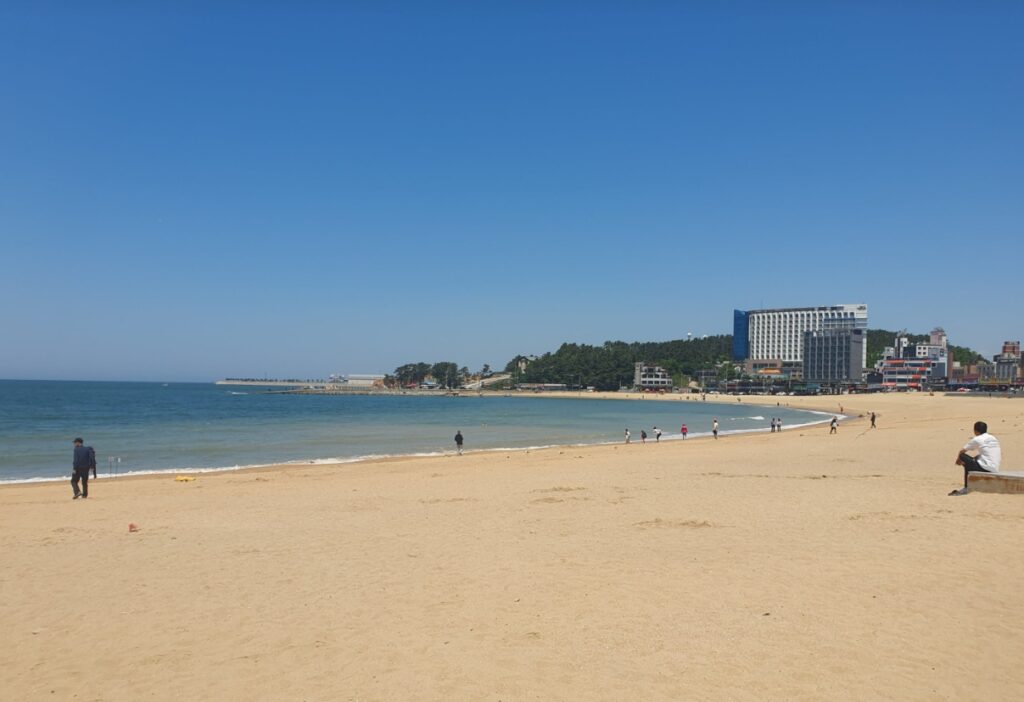
Eulwangri Beach (을왕리해수욕장): The most popular beach on the island. Sandy, swimmable, sunsets directly over the Yellow Sea. Lots of seafood restaurants, motels, and karaoke rooms along the strip. Weekend evenings have fireworks in summer.
Yeongjong Sea Side Rail Bike (영종해변레일바이크): A 5.6 km round-trip pedal-powered rail bike route along the coast. Operates year-round; ₩30,000–40,000 ($22–30 USD) for a 2–4 person bike.
Mudflats at low tide: Yeongjong’s coastlines have extensive tidal flats that emerge at low tide. Local Koreans dig for shellfish; visitors can walk on the mud and watch shorebirds. Check tide times before going.
How to Get There
AREX express train from Seoul Station, get off at Unseo Station or Incheon Airport Terminal 1 station. About 45–55 minutes, ₩4,150–11,000 ($3–8 USD).
Best for: Travelers with a long airport layover (4+ hours), beach lovers, anyone wanting a half-day escape combined with airport transit.
3. Muui Island (무의도) — Quick Ferry Hop from Yeongjong
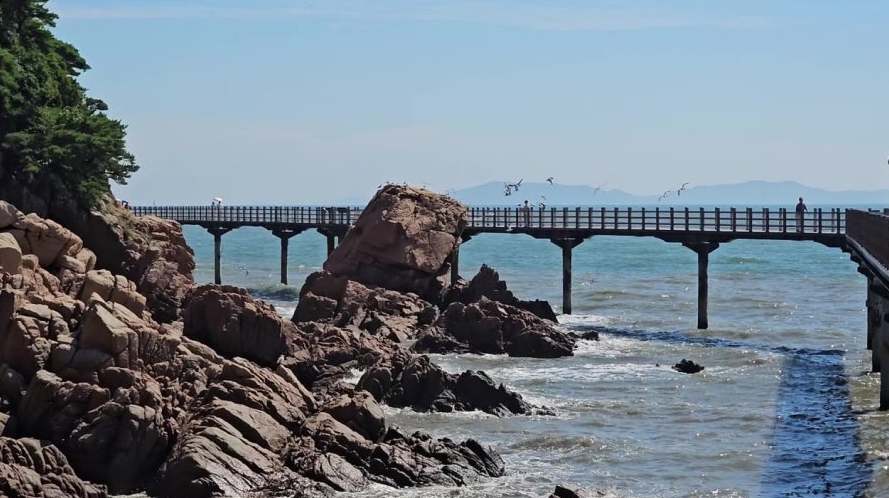
Just south of Yeongjong, Muui Island is reached by a 5-minute car ferry from the Jamjinnaru Ferry Terminal. Despite being right next to the airport, it feels remarkably rural — lush green hills, low-density villages, beaches with cleaner sand than the more crowded options on Yeongjong.
Muui became known to Korean audiences as the filming location of the 2003–2004 Korean drama Stairway to Heaven, which still draws K-drama fans. For international travelers, the appeal is simpler: a genuinely quiet small island that’s somehow only an hour from Seoul.
Highlights
Hanagae Beach (하나개해수욕장): A clean sandy beach with calm water and basic facilities. Small entrance fee (₩2,000 / $1.50 USD). Good for swimming in summer.
Somuui Island (소무의도): A tiny island connected to Muui by a pedestrian bridge. Even quieter than Muui itself — just one road climbing up a hill, a few houses, and ocean views in every direction.
Hill Trails: Muui has gentle hill trails crossing the small island, with views back toward Incheon and the airport. Not technical hiking — closer to nature walks.
How to Get There
From Incheon Airport Terminal 1, exit Gate 5 on the departures floor and take Bus 222 to Jamjinnaru Ferry Terminal (T-money accepted). The car ferry to Muui runs every 15–30 minutes from 7:00 AM to 8:00 PM. Walk-on ferry passengers pay ₩3,000 ($2 USD) for a return ticket.
Best for: A genuinely easy island escape from Seoul or the airport, K-drama fans, travelers wanting Muui’s small-island feel without committing to a long ferry trip.
4. Seungbongdo (승봉도) — The “Healing Island”
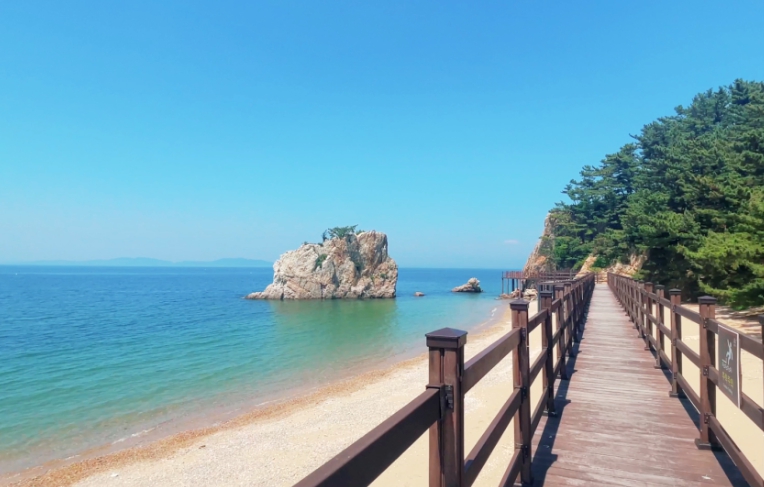
A 2-hour ferry from Incheon Port through the West Sea, Seungbongdo is a small island (just over 6 km²) known among Korean hikers as a “healing island” — relatively undeveloped, clean, and home to a 9.5 km coastal trail that loops the entire island in about 4 hours. The trail passes through pine forest, beaches, dramatic rock formations, and several small fishing villages.
This is the longest commitment on the list — at least 8 hours round-trip including ferries — but it offers something the other islands don’t: a genuine multi-hour hike through varied landscape, almost no other international tourists, and some of the most photogenic rock formations near Seoul.
The Coastal Trail Highlights
Walking the loop counterclockwise (the standard direction), you’ll pass:
Iille Beach (이일레해변): A 1,300-meter shallow beach popular with Korean families. Soft sand, but the beach has many shells — wear sandals.
Pine Forest Trail (산림욕장): A mat-paved walking path through dense pine forest. Easy walking for any age. The forest air is famously rich in phytoncides (the compounds Japanese researchers credit for shinrin-yoku, or forest bathing).
Buduchi Beach & Mokseom (부두치 해변, 목섬): A dramatic pebble beach where waves crash against rocks, named for the “thundering waves” that hit here. Mokseom is a small islet connected to the beach by a sandbar at low tide; at high tide, it looks like a floating turtle.
Candle Rock & Three Brothers Rock (촛대바위, 삼형제바위): Eroded rock formations along the coast. Candle Rock is the more famous of the two — a tall, narrow pillar shaped by centuries of wave erosion.
Sinhwangjeong Pavilion (신황정): A traditional Korean pavilion on a small hill with panoramic views of surrounding islands.
Fan Rock (부채바위): A rock formation shaped like an open hand fan, accessible from both the beach and an elevated wooden deck path.
Elephant Rock / Namdaemun Rock (남대문바위): The island’s signature landmark. A massive rock formation with a natural arch that resembles an elephant drinking water — particularly at high tide. This is the photo you’ll see on every Korean travel blog about Seungbongdo.
How to Get There
Subway Line 1 to Dong-Incheon Station, Exit 1. Walk through the underground passage and take Exit 7. Bus 12 or 24 to the Incheon Port Coastal Passenger Terminal (인천항 연안여객터미널).
From there, ferries to Seungbongdo run via Korea High-Speed Ferry (고려고속훼리). The trip takes about 2 hours, including a stop at Jawol Island. A typical schedule is:
FERRY SCHEDULE (TYPICAL)
Outbound (Incheon → Seungbongdo):
Morning departure around 8:30 AM, arrives ~10:00–10:15 AM
Weekend extra sailings: midday and afternoon options
Return (Seungbongdo → Incheon):
Afternoon departure around 2:30–3:00 PM, arrives ~4:30–5:00 PM
Express ferries (faster, reserved seating) available on weekends
Schedules vary by season, weather, and tides — always check the day before. Bring your passport (required for ferry boarding).
Booking: Check current schedules and book at kefship.com or via the Korean tourism portal at island.haewoon.co.kr. The Naver search “가보고 싶은 섬” (literally: “islands I want to visit”) brings up the official tourism site. Weekend bookings should be made in advance.
When to Go
Late spring (May–June) and early autumn (September–October) are the best windows — mild weather, comfortable hiking temperatures, and clear conditions for photographing the rock formations. Summer is hot and humid but offers swimming at Iille Beach. Winter is dramatic but cold, with reduced ferry service.
Tide timing matters. The rock formations (especially Elephant Rock and Mokseom) look completely different at high vs. low tide. Elephant Rock is most “elephant-like” at high tide. Mokseom is only accessible by foot at low tide. Search “승봉도 물때” (Seungbongdo tide times) for the local schedule.
Best for: Travelers staying 7+ days in Korea, hikers who want a real coastal trail, photographers wanting unique rock formations away from typical tourist locations, anyone seeking an “untouched” Korean island experience.
5. Sindo / Sido / Modo — The “Three Sisters”
Three small islands connected by bridges, accessible by a quick 10-minute ferry from Sammok Pier on Yeongjong Island. Together, the three sister islands form a small archipelago perfect for slow exploration — beaches, traditional fishing villages, hiking trails, and almost no tourist infrastructure.
Highlights
Sindo (신도): The largest of the three, with a small port village. Traditional Korean fishing community feel.
Sido (시도): Connected to Sindo by a bridge. Known for clean beaches and small fishing harbors.
Modo (모도): The smallest of the three, accessible via Sido. Famously features the Modo Modeling Beach, a sculpture park where contemporary art pieces are arranged along the beach.
How to Get There
AREX to Unseo Station on Yeongjong Island, then taxi or bus to Sammok Pier. Ferry to Sindo runs every 30–60 minutes, takes 10 minutes, costs around ₩3,000 ($2 USD).
Best for: Travelers wanting a leisurely day exploring small Korean villages, photographers, anyone interested in seeing modern Korean rural life at a relaxed pace.
Which Island Should You Choose?
DECISION GUIDE
“I have one day and want easy access” → Ganghwa Island (no ferry, direct bus from Seoul, rich history)
“I’m at Incheon Airport with a long layover” → Yeongjong Island (you’re already on it) or Muui Island (quick ferry hop)
“I want to hike on the coast and see dramatic rocks” → Seungbongdo (the 9.5 km loop with Elephant Rock and other formations)
“I want quiet small-village Korean island life” → Sindo/Sido/Modo (the three sisters)
“I want UNESCO history with my island” → Ganghwa Island (dolmens, ancient temples, fortresses)
Practical Tips for All Island Trips
Bring your passport. Korean ferry operators require passport verification for all passengers, including domestic ferries to small islands like Seungbongdo. A driver’s license or ID card alone is not enough for foreigners.
Check weather and tides. Ferry services can be cancelled in rough weather, especially in winter. Tide timing affects mudflat access, photogenic rock formations, and beach activities. Korean weather apps (Naver Weather, Kakao Map’s weather feature) are more accurate for coastal conditions than international apps.
Pack snacks and water. Smaller islands (especially Seungbongdo and the Three Sisters) have limited convenience stores. Bring food for the day.
Cash is useful. Many small island businesses prefer cash, especially family-run restaurants and small ferries. ₩50,000 ($37 USD) in small bills is enough for most day trips.
Comfortable shoes. Even “easy” island activities involve more walking than expected. Sandals work for beaches; closed-toe shoes are better for hiking trails.
English support is limited outside Ganghwa. Yeongjong and Muui have basic English signage; the smaller islands have almost none. Papago app handles most situations. Korean phrases for “ferry” (페리), “next departure” (다음 출발), and “how much” (얼마예요) are useful to learn.
Book weekend ferries in advance. Korean weekend island traffic — especially in spring and fall — can fill ferries. Friday evening for a Saturday trip is usually safe; Saturday morning is often too late.
Frequently Asked Questions
Which island is best for a first-time Korea visitor?
If you have only 4–5 days in Korea, skip the islands entirely — focus on Seoul. If you have 7+ days, Ganghwa is the easiest first island. If you have 10+ days and want a unique day, Seungbongdo offers the most distinctive experience.
Can I camp overnight on these islands?
Yes, especially Muui, Seungbongdo, and Yeongjong have designated camping areas or beach-side campgrounds. Wild camping is technically not allowed but is sometimes overlooked on smaller islands. Korean island weekends with tents are a popular activity.
Are there English-speaking guides for these islands?
Ganghwa has multiple English-language guided day tours through Klook and Trazy. The smaller islands generally don’t have organized English tours — you’ll be navigating independently with apps. This is part of why Ganghwa is the most foreigner-friendly choice.
Are these islands accessible by Korail Pass?
Korail Pass doesn’t cover ferries or island-bound buses. It covers KTX, ITX, and Mugunghwa trains to nearby mainland stations (Incheon, Yongsan, etc.), but from there you’ll pay separately for ferries, buses, and taxis. T-money card or cash covers all other costs.
Is Seungbongdo’s 9.5 km trail difficult?
Moderate. The trail is well-marked, mostly flat with some gentle hills, and uses wooden boardwalks and matted paths in the harder sections. Most reasonably fit adults complete it in 4 hours including photo breaks. Not suitable for very young children or anyone with mobility issues.
Can I see North Korea from any of these islands?
Yes — from Ganghwa Island’s Peace Observatory. On clear days, the telescopes give a clear view across the Han River estuary into North Korean farmland and villages. The contrast with what most international media shows about North Korea is part of why this is a popular stop. Other islands on this list are too far south for this.
Should I rent a car for these trips?
For Ganghwa, yes — a rental car lets you cover multiple sites in one day. For ferry islands (Muui, Seungbongdo, Three Sisters), no — public transport and walking covers everything. Yeongjong is fine with public transport but a car opens up the more remote beaches.
Final Thoughts
The islands near Seoul are a genuinely underrated part of Korea travel. Most international tour itineraries skip them entirely — which means even on a weekend, you can find yourself on a 9 km coastal trail with almost no other foreign tourists, looking at a rock formation that looks exactly like an elephant drinking water. Combined with the historical layers of Ganghwa or the airport-adjacent ease of Yeongjong and Muui, there’s an option for almost any traveler willing to add a day to their itinerary.
If you’re staying in Korea for less than a week, focus on Seoul, Busan, and maybe one other major city. If you’re staying longer, picking one of these islands turns a Korea trip into something more textured than the standard tourist circuit. Ganghwa is the easy entry point; Seungbongdo is the reward for going deeper.
Ferry schedules, fares, and admissions verified for April 2026. Korean ferry services are weather-dependent and can be cancelled with little notice — always check kefship.com or island.haewoon.co.kr the day before your trip. Korean weekend island traffic is significant; book in advance for spring and fall.